BACKPRESSURE Variable Transducer (BVT) System
- Ensure all vacuum hoses are correctly routed and securely attached. Replace any crimped or broken hoses. Ensure there is no vacuum to EGR valve at idle. Install tachometer. Disconnect idle air bypass valve electrical connector (if equipped). Remove and plug vacuum hose from EGR valve.
- Start engine and idle in neutral. Note idle speed. Using hand vacuum pump, slowly apply 5-10 in. Hg of vacuum to EGR valve. When vacuum is fully applied to EGR valve:
- If idle speed drops more than 100 RPM or if engine stalls, perform next step. If idle speed does not drop, replace EGR valve.
- If EGR passages are blocked, clean EGR valve.
- Remove vacuum from EGR valve. If idle speed does not return to normal, check for contamination, clean valve.
- If symptom still exists, replace EGR valve
- Reconnect idle air by-pass valve electrical connector. Unplug and reconnect EGR vacuum hose. Disconnect vacuum hose at BVT. Gently blow into hose to port "C" until relief valve closes and at same time apply 5-10 in. Hg of vacuum to port E. See Fig 1
. Port "E" should hold vacuum as long as pressure is applied to port "C".
- Apply 5-10 in. Hg of vacuum to ports "B" and "C". Both ports should hold vacuum. Replace BVT if any port fails to hold vacuum.
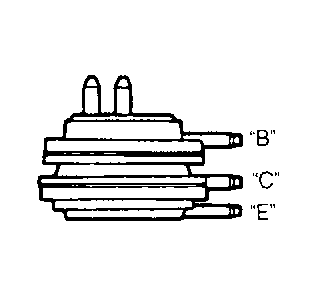 Courtesy of FORD MOTOR CO.