Starter Does Not Crank
- If vehicle is equipped with Passive Anti-Theft System (PATS), check system for Diagnostic Trouble Codes (DTCs). See
PASSIVE ANTI-THEFT SYSTEMS - SABLE & TAURUS article in ACCESSORIES & EQUIPMENT. Repair as necessary.
- Verify battery condition. Battery voltage should be 12 volts or more. Load test battery at approximately one-half cold cranking amperage rating. See load tester manufacturer's instructions. If battery voltage is less than 12 volts or loaded battery voltage is less than 9.6 volts, service battery or charging system as necessary.
- Measure voltage between battery positive post and battery ground cable connection at engine. If battery voltage is present, go to next step. If battery voltage is not present, replace battery ground cable and check system operation.
- Measure resistance between ground and starter motor case. If resistance is less than 5 ohms, go to next step. If resistance is greater than 5 ohms, verify starter is mounted correctly. Repair as necessary. If starter is mounted properly, remove starter and clean mounting surfaces. See STARTER MOTOR under REMOVAL & INSTALLATION.
- Turn ignition off and place transaxle in Park or Neutral. Remove starter solenoid plastic safety cap (install when testing is complete). Measure voltage between starter motor terminal "B" and ground. To identify starter terminals, see Figure. If battery voltage is present, go to next step. If battery voltage is not present, replace battery positive cable and check system operation.
- Connect one end of a jumper wire to starter "B" terminal. Momentarily touch other end of jumper wire to starter "S" terminal. If starter motor operates, go to next step. If starter motor does not operate, replace starter motor and check system operation. See STARTER MOTOR under REMOVAL & INSTALLATION.
- Disconnect starter motor "S" connector. Turn ignition switch to START position and measure voltage between starter motor electrical connector terminal "S" (White/Pink wire) and ground. If battery voltage is present with ignition switch in START position, go to next step. If battery voltage is not present, clean starter motor terminal "S". Check wires and connections for looseness or corrosion. Repair as necessary. Check system operation.
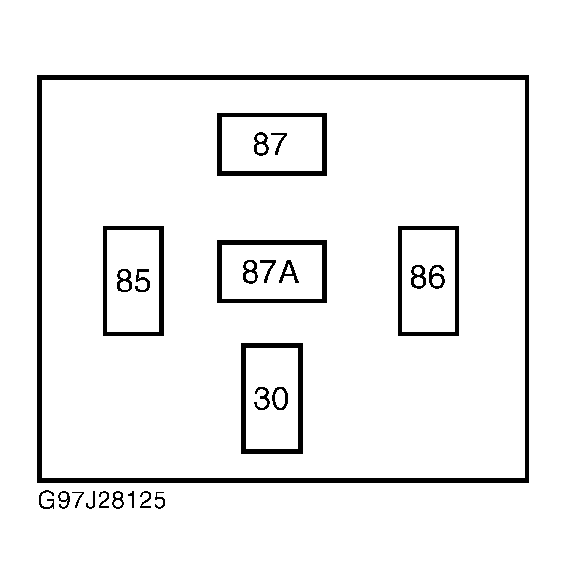
- Remove starter relay from engine compartment fuse/relay box. With transaxle in Park or Neutral and ignition switch in START position, measure voltage between starter relay electrical connector terminal No. 85 and ground. See Fig 1. If battery voltage is present, go to next step. If battery voltage is not present, go to step 13.
 Courtesy of FORD MOTOR CO.
- Measure voltage between starter relay connector terminal No. 87 and ground. See Fig 1. If battery voltage is present, go to next step. If battery voltage is not present, check fuse F107 (40-amp) in battery junction box. If fuse is okay, repair open in Light Green/Purple wire. See WIRING DIAGRAMS .
- Measure resistance of starter relay ground circuit, between starter relay electrical connector terminal No. 86 (Pink wire) and ground with ignition switch in START position. If resistance is less than 5 ohms, go to step 12. If resistance is more than 5 ohms, go to next step.
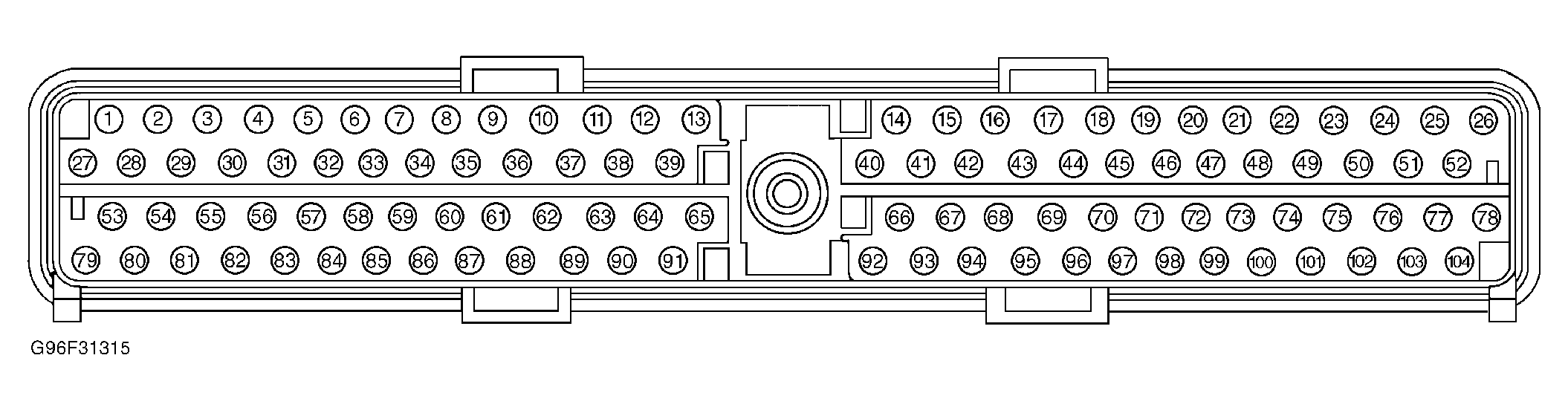
- Disconnect PCM connector C175. Measure resistance of Pink wire between starter relay connector terminal No. 86 and PCM connector terminal No. 44. See Fig 2. If resistance is less than 5 ohms, replace PCM and check system operation. If resistance is more than 5 ohms, repair Pink wire and check system operation.
 Courtesy of FORD MOTOR CO.
- Measure resistance between starter relay connector terminal No. 30 (White/Pink wire) and starter motor connector terminal "S". If resistance is less than 5 ohms, install new starter relay and check system operation. If resistance is more than 5 ohms, repair White/Pink wire and check system operation.
- Remove fuse F237 (15-amp) from central junction box. Hold ignition switch in START position and measure voltage between fuse F237 input cavity and ground. If battery voltage is present, go to next step. If battery voltage is not present, go to step 18.
- Check fuse F237 (15-amp). If fuse is okay, go to next step. If fuse is faulty, go to step 17.
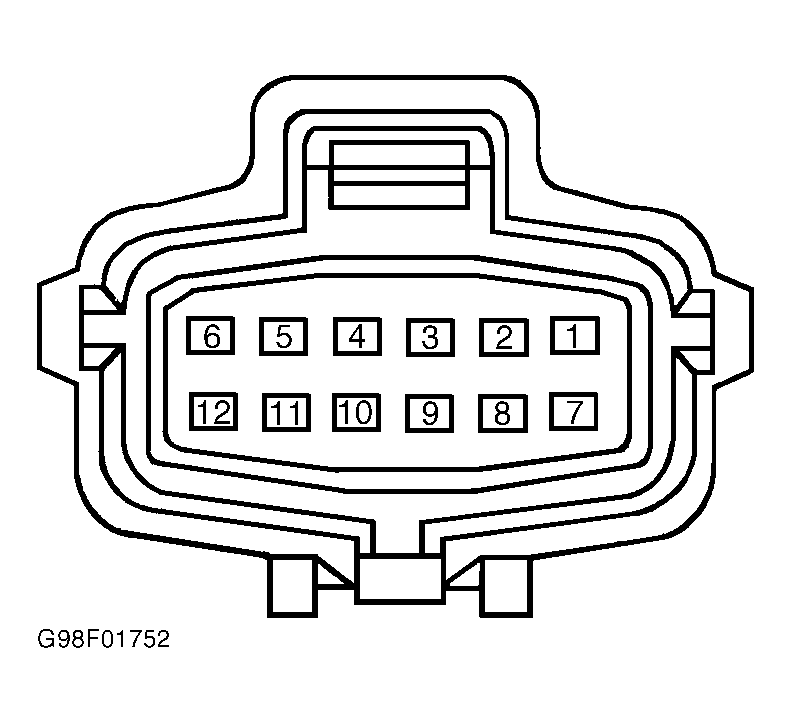
- Install fuse F237. Disconnect Transmission Range (TR) sensor. Measure voltage between TR sensor electrical connector terminal No. 10 (Brown/Pink wire) and ground with ignition switch in START position. See Fig 3. If battery voltage is present, go to next step. If battery voltage is not present, repair Brown/Pink wire and check system operation.
 Courtesy of FORD MOTOR CO.
- Measure resistance of Tan/Red wire between starter relay connector terminal No. 85 and TR sensor connector terminal No. 12. If resistance is more than 5 ohms, repair Tan/Red wire and check system operation. If resistance is 5 ohms or more, check TR sensor adjustment. Adjust as necessary, using TR Sensor Alignment Tool (T97L-70010-A). If adjustment is okay, replace TR sensor and check system operation.
- Ensure starter relay is removed. Measure resistance between TR sensor terminal No. 10 (Brown/Pink wire) and ground. Measure resistance between TR sensor terminal No. 12 (Tan/Red wire) and ground. If resistance is 10,000 ohms or more, check TR sensor adjustment. Adjust as necessary, using TR Sensor Alignment Tool (T97L-70010-A). If adjustment is okay, replace TR sensor and check system operation. If resistance is less than 10 k/ohms, repair short to ground on affected circuit.
- Disconnect ignition switch connector. Measure voltage between connector terminal (Light Green/Purple wire) and ground. If battery voltage is present, go to next step. If battery voltage is not present, inspect fuse F107 (40-amp) in battery junction box. If fuse is okay, repair Light Green/Purple wire.
- Test ignition switch. See
STEERING COLUMN SWITCHES - SABLE & TAURUS article in ACCESSORIES & EQUIPMENT. Replace as necessary. If ignition switch is okay, repair open or short in Red/Light Blue wire between ignition switch connector and fuse F107.