Test A: Engine Does Not Crank
- Check for Passive Anti-Theft System (PATS) Diagnostic Trouble Codes (DTC). See appropriate PASSIVE ANTI-THEFT SYSTEMS article. If no PATS DTCs exist, go to next step. If any PATS DTCs exist, diagnose and repair as necessary.
- Verify battery condition. Battery voltage should be 12 volts or more. Load test battery at approximately one-half cold cranking amperage rating. See load tester manufacturer's instructions. If battery is okay, go to next step. If battery voltage is less than 12 volts or loaded battery voltage is less than 9.6 volts, service battery or charging system as necessary. Check system operation.
- Measure voltage between positive battery post and negative battery cable connection at engine block. If voltage is more than 10 volts, go to next step. If voltage is 10 volts or less, replace battery ground cable. Check system operation.
- Measure voltage between positive battery post and starter motor case. If voltage is more than 10 volts, go to next step. If voltage is 10 volts or less, clean starter mounting flange and ensure starter is mounted properly. Check system operation.
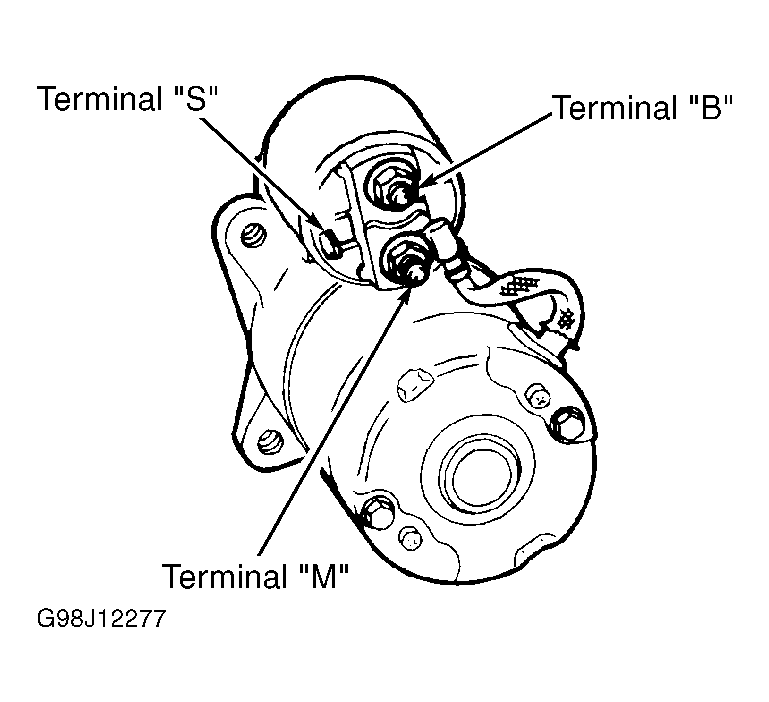
- Measure voltage between starter motor terminal "B" and ground. See Fig 1. If voltage is more than 10 volts, go to next step. If voltage is 10 volts or less, replace battery positive cable. Check system operation.
 Courtesy of FORD MOTOR CO.
- Connect a fused jumper wire to starter terminal "B". Momentarily touch other end of jumper wire to starter terminal "S". If starter cranked engine, go to next step. If starter did not crank engine, replace starter. See STARTER MOTOR under REMOVAL & INSTALLATION. Check system operation.
- Disconnect starter harness connector "S" (Gray wire). Measure voltage between starter harness connector "S" (Gray wire) and ground while turning ignition switch to START position. If voltage is 10 volts or less, go to next step. If voltage is more than 10 volts, clean or repair "S" terminal and connector. Check system operation.
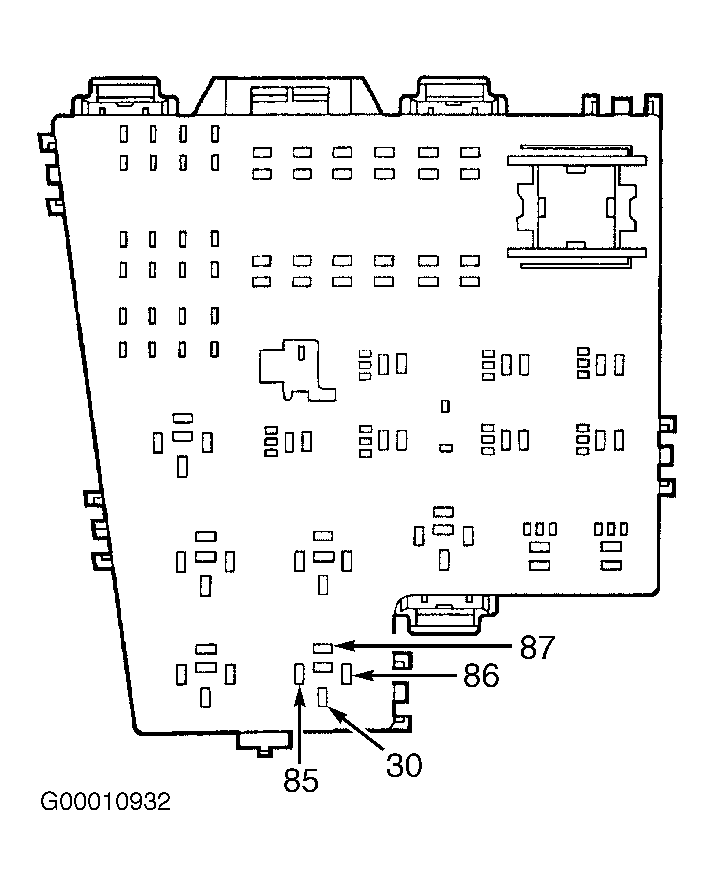
- Remove starter relay from Auxiliary Junction Box (AJB), located underhood. On manual transmission models, have a helper depress clutch. On all models, measure voltage between starter relay cavity No. 86 and ground while turning ignition switch to START position. See Fig 2. If voltage is more than 10 volts, go to next step. If voltage is 10 volts or less, go to step 17.
 Courtesy of FORD MOTOR CO.
- On manual transmission models, have a helper depress clutch. On all models, measure resistance between starter relay cavity No. 85 and ground while turning ignition switch to START position. If resistance is 5 ohms or more, go to step 11 (M/T), or next step (A/T). If resistance is less than 5 ohms, go to step 14.
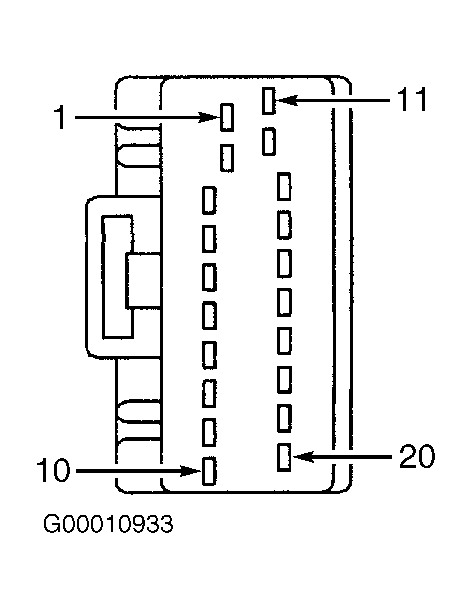
- Disconnect 20-pin instrument cluster connector C220B. Measure resistance of Black/Yellow wire between starter relay cavity No. 85 and instrument cluster connector C220B terminal No. 18. See Fig 2 and Fig 3
. If resistance is less than 5 ohms, replace instrument cluster. See appropriate ANALOG INSTRUMENT PANELS article in ACCESSORIES & EQUIPMENT. If resistance is 5 ohms or more, repair open on Black/Yellow wire. After repairs, check system operation.
 Courtesy of FORD MOTOR CO.
- Disconnect 2-pin Clutch Pedal Position (CPP) switch connector. Measure resistance between CPP switch harness connector terminal No. 2 (Black/Yellow wire) and ground. If resistance is less than 5 ohms, go to next step. If resistance is 5 ohms or more, go to step 13.
- Measure resistance of Black/Yellow wire between CPP harness connector terminal No. 1 and starter relay cavity No. 85. If resistance is less than 5 ohms, replace CPP switch. If resistance is 5 ohms or more, repair open in Black/Yellow wire. After repairs, check system operation.
- Measure resistance of Black/Yellow wire between CPP switch harness connector terminal No. 2 and instrument cluster connector C220B terminal No. 18. If resistance is less than 5 ohms, replace instrument cluster. See appropriate ANALOG INSTRUMENT PANELS article. If resistance is 5 ohms or more, repair open in Black/Yellow wire. After repairs, check system operation.
- Measure voltage between starter relay cavity terminal No. 30 and ground. See Fig 2. If voltage is more than 10 volts, go to next step. If voltage is less than 10 volts, repair open in power and distribution circuit to starter relay. See WIRING DIAGRAMS . Check system operation.
- Disconnect starter terminal "S" connector (Gray wire). Measure resistance of Gray wire between starter relay cavity terminal No. 87 and starter harness connector. If resistance is less than 5 ohms, go to next step. If resistance is 5 ohms or more, repair open in Gray wire. Check system operation.
- Measure resistance between starter relay cavity terminal No. 87 (Gray wire) and ground. If resistance is less than 10,000 ohms, repair short to ground in Gray wire. If resistance is 10,000 ohms or more, replace starter relay. After repairs, check system operation.
- Remove fuse No. 1 (5-amp), located in Central Junction Box (CJB). CJB is located under right side of instrument panel. Check fuse No. 1. If fuse is okay, go to next step. If fuse is faulty, go to step 24.
- Measure voltage between input side of fuse No. 1 cavity in CJB and ground while turning ignition switch to START position. If voltage is less than 10 volts, go to next step. If voltage is 10 volts or more, go to step 22.
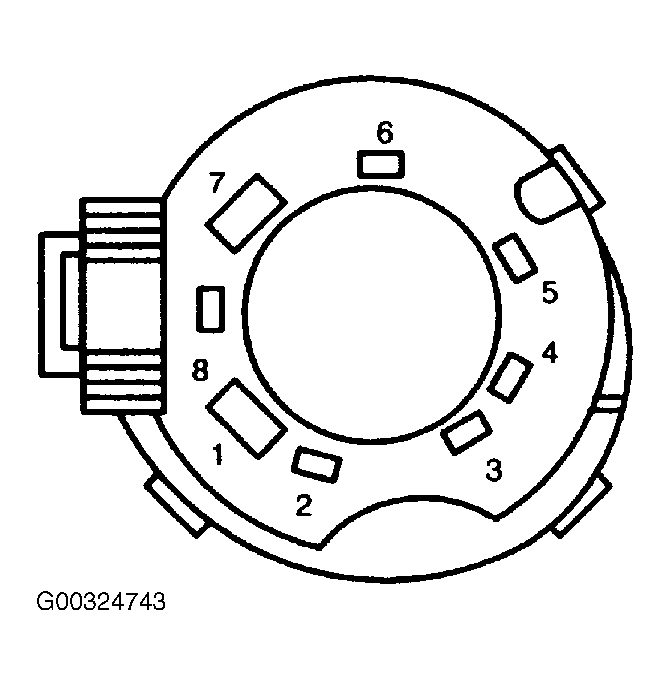
- Disconnect 8-pin ignition switch connector C250. Measure voltage between ignition switch harness connector C250 terminal No. 1 (Red wire) and ground. See Fig 4. If voltage is 10 volts or more, go to next step. If voltage is less than 10 volts, repair open power feed circuit to ignition switch. See WIRING DIAGRAMS . Check system operation.
 Courtesy of FORD MOTOR CO.
- Measure resistance of Gray/Black wire between ignition switch harness connector C250 terminal No. 3 and input side of fuse No. 1 cavity in CJB. If resistance is less than 5 ohms, go to next step. If resistance is 5 ohms or more, repair open in Gray/Black wire. Check system operation.
- Measure resistance between ignition switch harness connector C250 terminal No. 3 (Gray/Black wire) and ground. If resistance is less than 10,000 ohms, repair short to ground in Gray/Black wire. If resistance is 10,000 ohms or more, replace ignition switch. After repairs, check system operation.
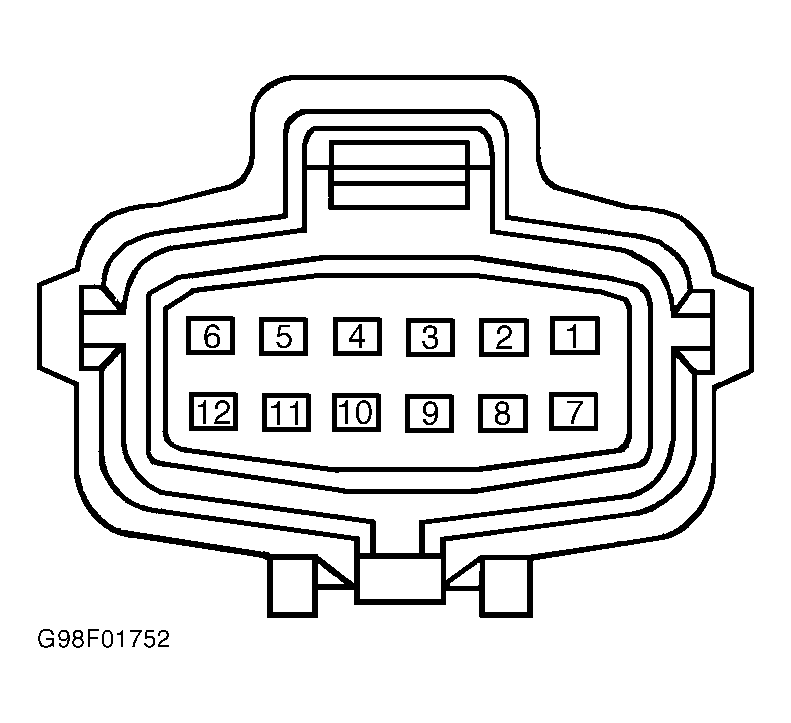
- Install fuse No. 1 (5-amp) in CJB. Disconnect Digital Transmission Range (DTR) sensor connector. DTR is located on left side of transmission. Measure voltage between DTR sensor harness connector terminal No. 10 (Gray/Orange wire) and ground while turning ignition switch to START position. See Fig 5. If voltage is 10 volts or more, go to next step. If voltage is less than 10 volts, repair open in Gray/Orange wire. Check system operation.
 Courtesy of FORD MOTOR CO.
- Measure resistance of Gray wire between DTR harness connector terminal No. 12 and starter relay cavity No. 86. If resistance is less than 5 ohms, adjust DTR switch. See DIGITAL TRANSMISSION RANGE SENSOR under ADJUSTMENTS. If resistance is 5 ohms or more, repair open in Gray wire. After repairs, check system operation.
- Measure resistance between output side of fuse No. 1 cavity in CJB (Gray/Orange wire) and ground. If resistance is 10,000 ohms or more, go to next step. If resistance is less than 10,000 ohms, repair short to ground in Gray/Orange wire. Check system operation.
- Measure resistance between DTR harness connector terminal No. 12 (Gray wire) and ground. If resistance is 10,000 ohms or more, go to next step. If resistance is less than 10,000 ohms, repair short to ground in Gray wire. Check system operation.
- Connect DTR sensor connector. Install new fuse No. 1 (5-amp). Check system operation. If fuse fails, replace shorted DTR sensor. Recheck system operation.