Diagnostic Procedure
- Apply brake pedal and view brakelights. Do brakelights illuminate? If so, go to step 7. If not, go to next step.
- Turn ignition switch to OFF position. Measure resistance in fuse No. 11 (15-amp), in Central Junction Box (CJB). Is the resistance 5 ohms or less? If so, go to step 4. If not, go to next step.
- Disconnect Brake Pedal Position (BPP) switch harness connector. Measure the resistance in battery feed circuit between BPP switch harness connector terminal No. 1 and ground. See Fig 1 . Is the resistance 10 k/ohms or less? If so, repair short to ground in battery feed circuit and test the system for normal operation. If not, go to next step.
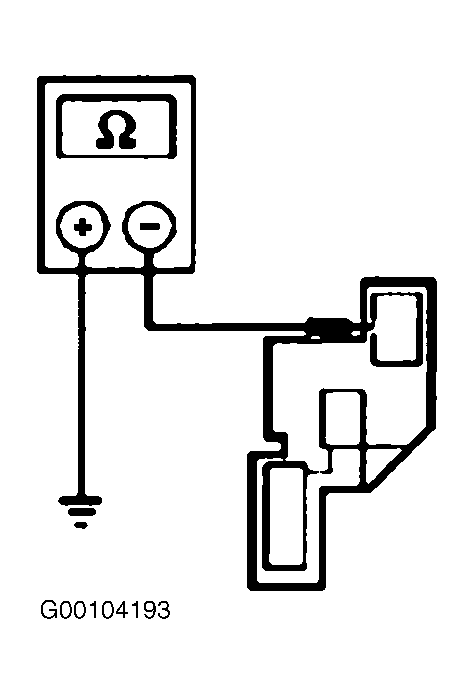 Courtesy of FORD MOTOR CO.
- Measure the resistance in battery feed circuit between the output side of fuse No. 11 (15-amp) and the BPP switch harness connector terminal No. 1. See Fig 2. Is the resistance 5 ohms or less? If so, go to next step. If not, repair open in battery feed circuit and test the system for normal operation.
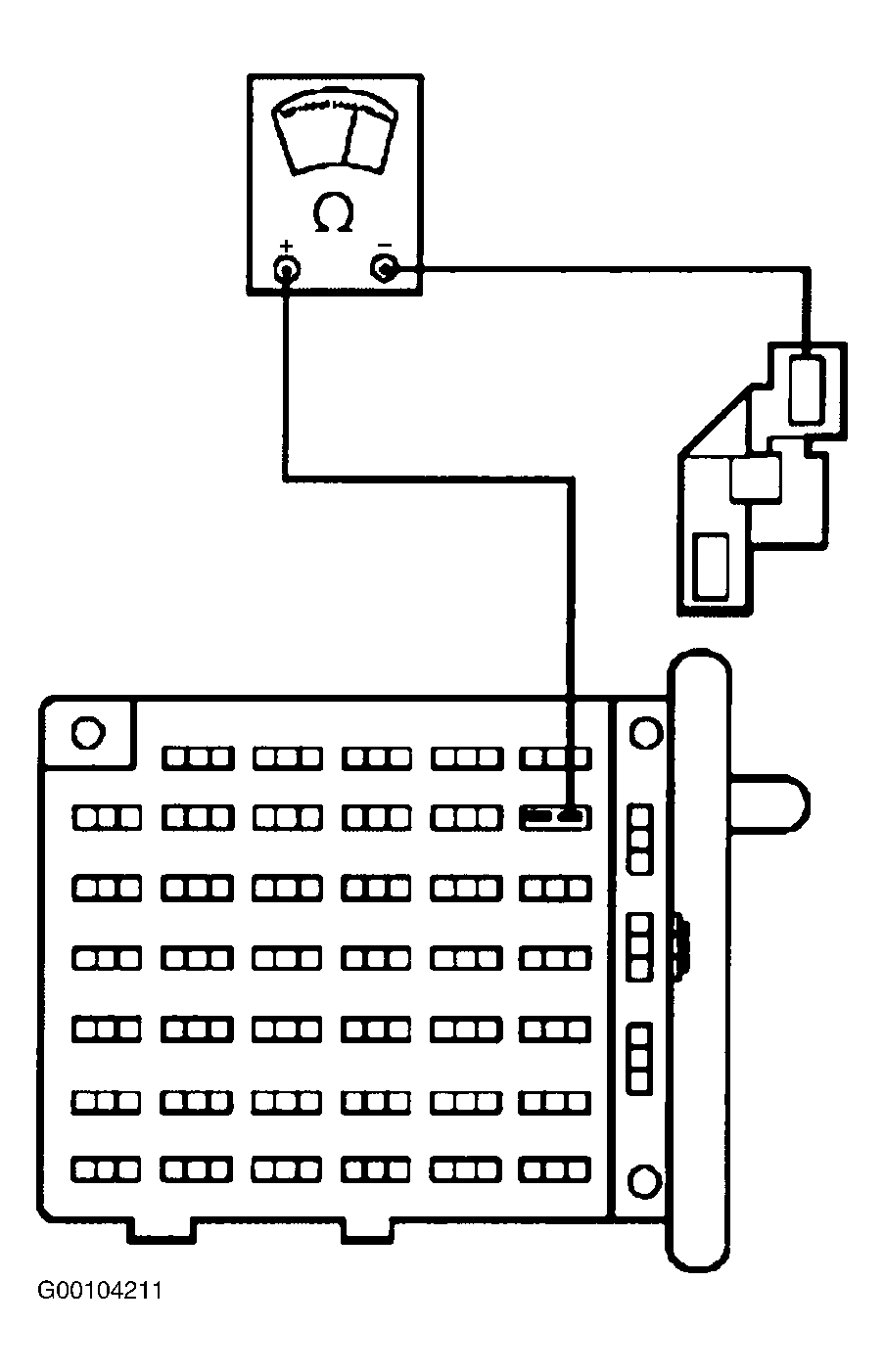 Courtesy of FORD MOTOR CO.
- Measure the resistance of the BPP switch while open (OFF) and closed (ON). See Fig 3. Is the resistance of the switch greater than 10 k/ohms while OFF, and 5 ohms or less while ON? If so, go to next step. If not, replace BPP switch and test the system for normal operation. See BRAKE PEDAL POSITION SWITCH under REMOVAL & INSTALLATION.
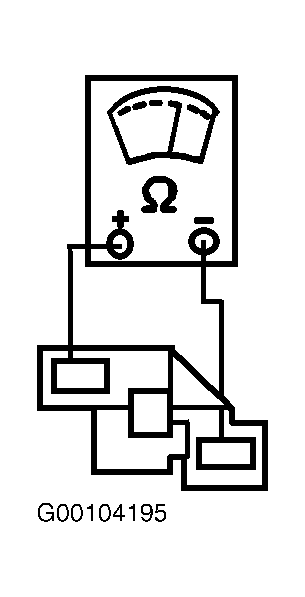 Courtesy of FORD MOTOR CO.
- Disconnect shift interlock actuator harness connector. Measure the resistance between shift interlock actuator harness connector terminal No. 1 and ground. See Fig 4. Is the resistance 10 k/ohms or less? If so, repair short to ground and test the system for normal operation. If not, go to next step
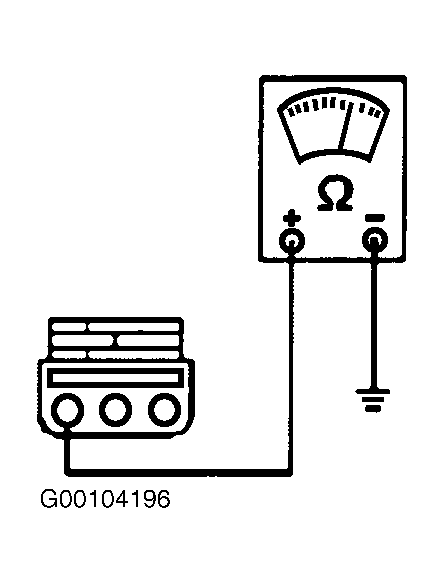 Courtesy of FORD MOTOR CO.
- Measure the resistance between the shift interlock actuator harness connector terminal No. 1 and BPP switch harness connector terminal No. 2. See Fig 5. Is the resistance 5 ohms or less? If so, go to next step. If not, repair open in Light Green wire and test the system for normal operation.
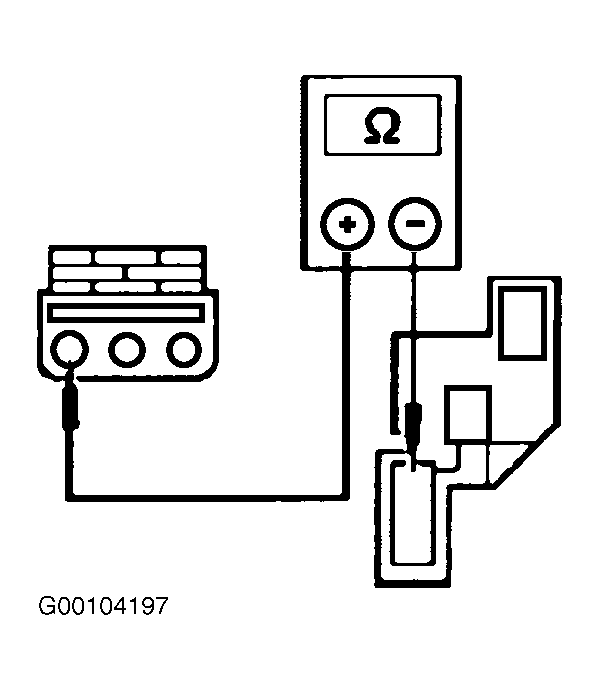 Courtesy of FORD MOTOR CO.
- Turn ignition switch to ON position. Measure the voltage at the shift interlock actuator harness connector terminal No. 3. See Fig 6. Does battery voltage exist? If so, go to step 12. If not, go to next step.
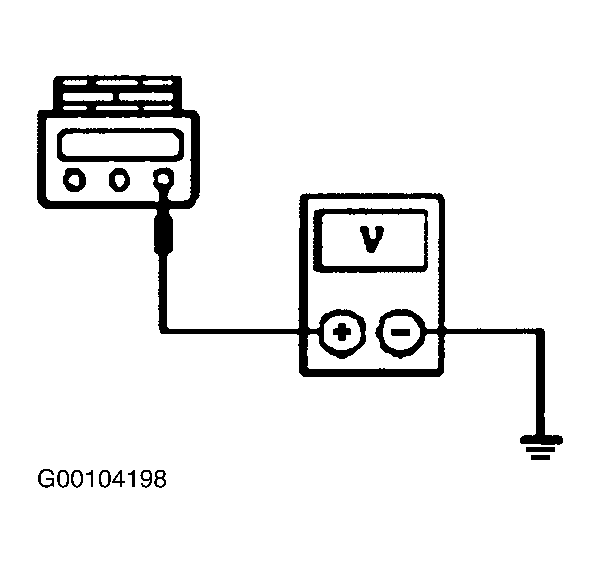 Courtesy of FORD MOTOR CO.
- Turn ignition switch to OFF position. Measure resistance in fuse No. 6 (10-amp). Is the resistance 5 ohms or less? If so, go to step 11. If not, go to next step.
- Measure the resistance in ignition feed circuit between shift interlock actuator harness connector terminal No. 3 and ground. See Fig 7. Is the resistance 10 k/ohms or less? If so, repair short to ground in ignition feed circuit and test the system for normal operation. If not, go to next step.
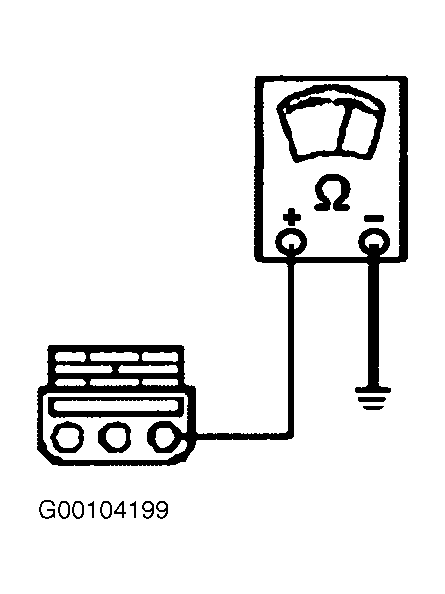 Courtesy of FORD MOTOR CO.
- Measure the resistance in Black/Orange wire between the output side of fuse No. 6 (10-amp) and the shift interlock actuator harness connector terminal No. 3. See Fig 8. Is the resistance 5 ohms or less? If so, go to next step. If not, repair open in Black/Orange wire and test system for normal operation.
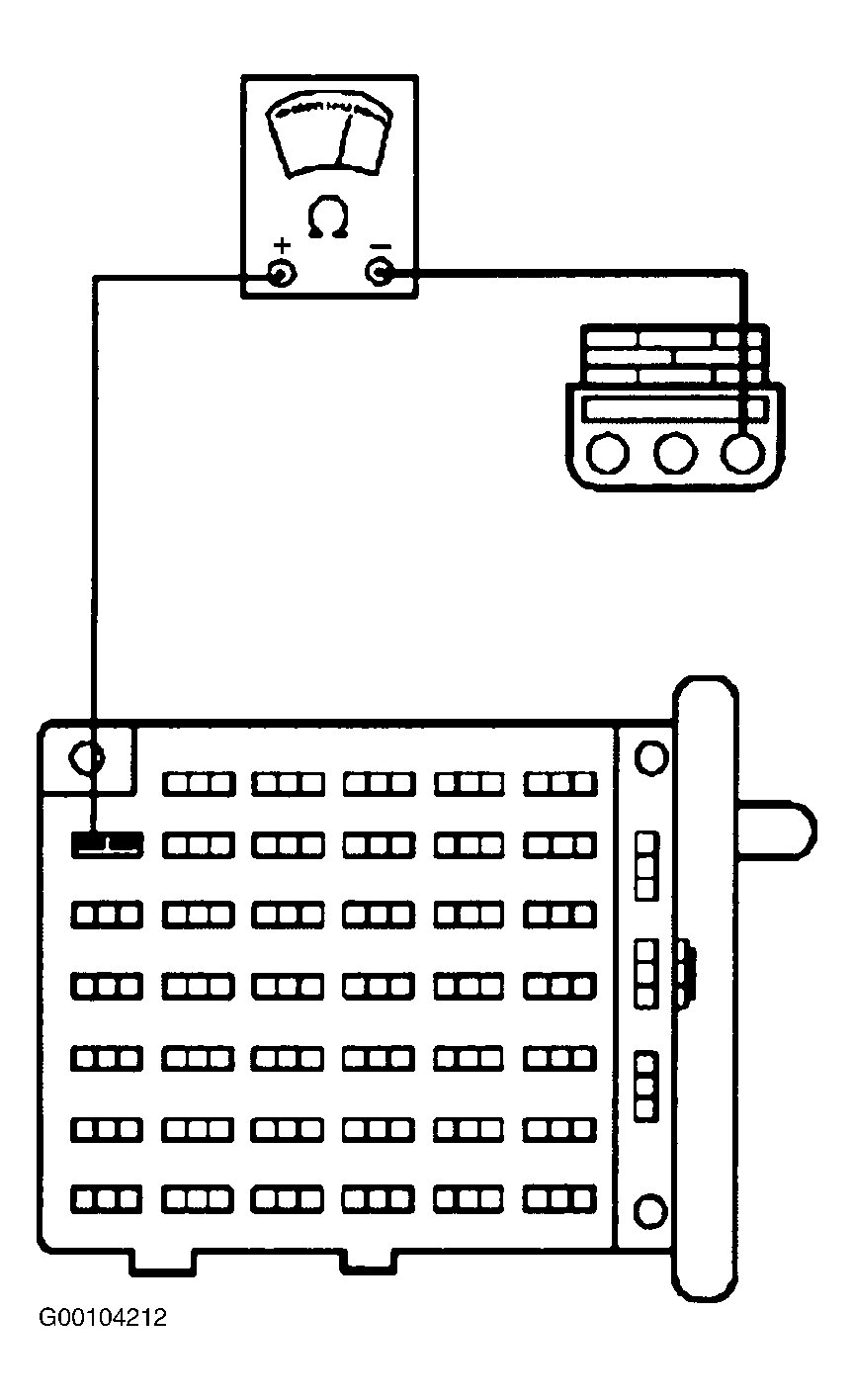 Courtesy of FORD MOTOR CO.
- Measure the resistance in ground circuit between the shift interlock actuator harness connector terminal No. 2 and ground. See Figure. Is the resistance 5 ohms or less? If so, replace shift interlock actuator and test the system for normal operation. See SHIFT INTERLOCK ACTUATOR under REMOVAL & INSTALLATION. If not, repair open in ground circuit and test the system for normal operation.