Fuel EVAP System Test
- Inspect all EVAP system lines and connections for sharp bends or damage. See Fig 1. Fuel inlet pipe may also be referred to as fuel filler pipe. Inspect fuel inlet pipe for cracks, damage or fuel leakage. Inspect fuel tank cap for cracks or deformed gasket. Replace components if defective or damaged.
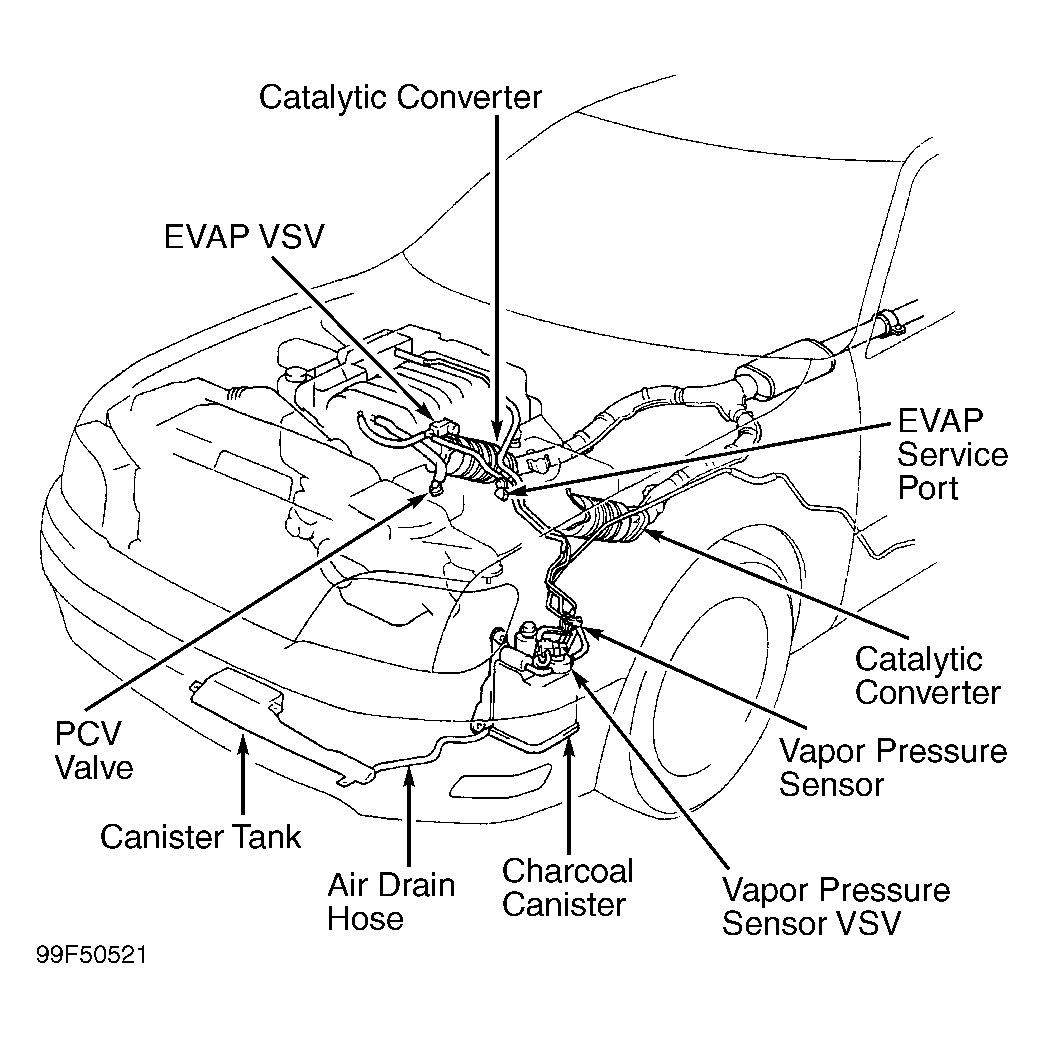 Courtesy of © TOYOTA, LICENSE AGREEMENT TMS1002
- Start engine and warm engine to normal operating temperature. Shut engine off. Connect vacuum gauge from EVAP system test kit to EVAP service port. EVAP service port is located in engine compartment, in the purge vacuum hose. See Fig 1.
- EVAP Vacuum Switching Valve (VSV) must be operated. If scan tool is available, go to next step. If scan tool is not available, go to step 5.
- Connect scan tool to Data Link Connector (DLC) No. 3. See Figure. Start engine. Turn scan tool on. Select ACTIVE TEST MODE on scan tool. Using scan tool manufacturer's instructions, activate EVAP VSV. Go to step 6.
- Disconnect EVAP VSV electrical connector. EVAP VSV is located near top of engine and contains a Black 2-pin connector. See Fig 1. Using jumper wires, connect battery voltage and ground to EVAP VSV terminals. Start engine. Go to next step.
- Check vacuum reading on vacuum gauge with engine idling. Vacuum should be .368-19.713 in. Hg for more than 5 seconds. If vacuum is within specification, go to next step. If vacuum reading is not within specification, check for loose or restricted vacuum hose to EVAP service port, or for malfunctioning EVAP VSV. To check EVAP VSV operation, see EVAP VACUUM SWITCHING VALVE .
- Shut engine off. If using scan tool to operate EVAP VSV, stop operation of EVAP VSV. Remove scan tool. Go to next step. If connecting battery voltage to EVAP VSV to operate EVAP VSV, disconnect jumper wires and reconnect electrical connector on EVAP VSV. Go to next step.
- Disconnect vacuum gauge from EVAP service port. Connect pressure gauge to EVAP service port. Raise and support front of vehicle. Remove engine undercover. Install hose crimper on Yellow mark of charcoal canister air drain hose. See Fig 2.
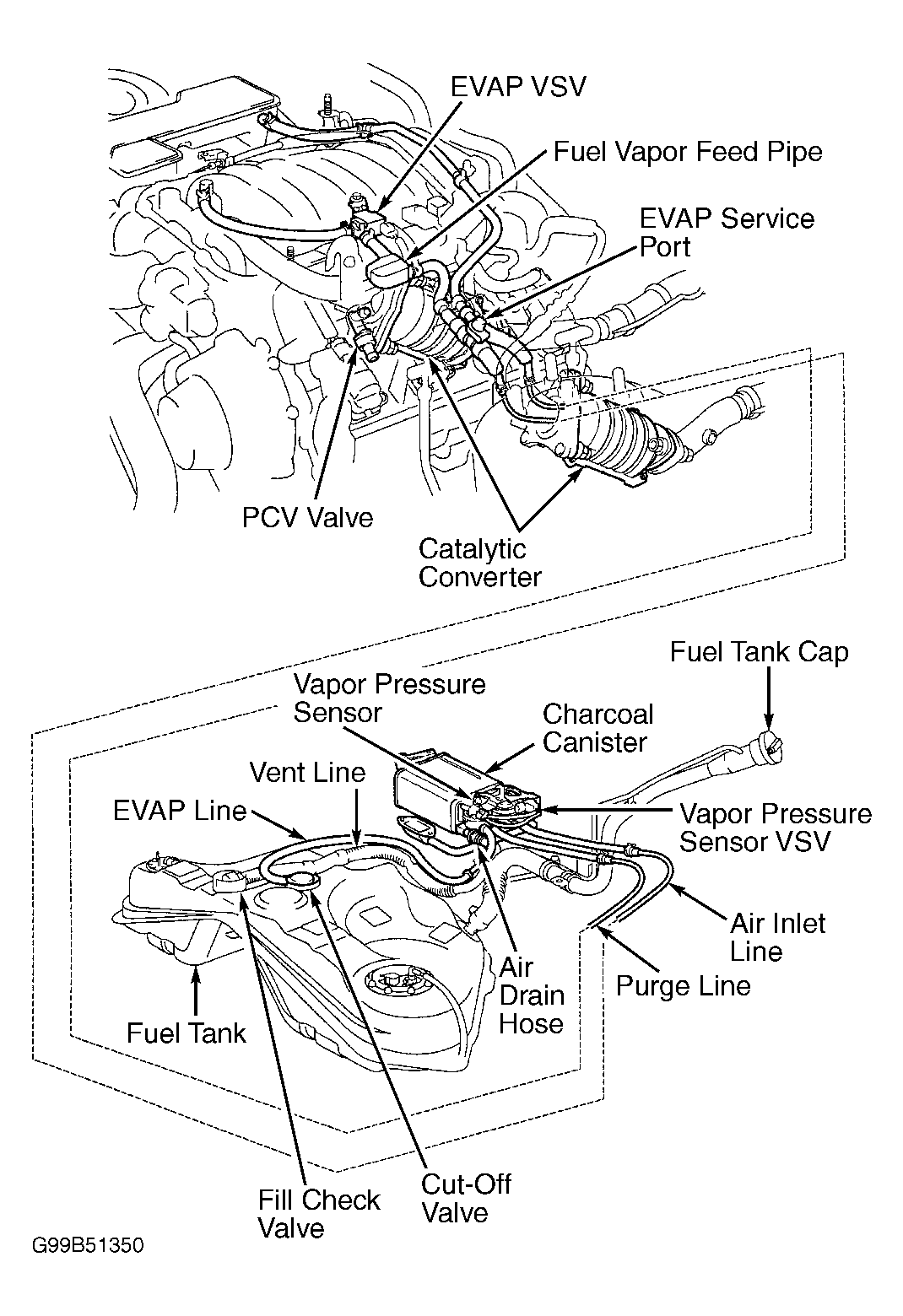 Courtesy of © TOYOTA, LICENSE AGREEMENT TMS1002
- Apply 13.5-15.5 in. H2
O of pressure to EVAP service port. After 2 minutes of applying the pressure, the pressure should be 7.7-8.8 in. H2
O. If pressure is within specification, remove hose crimper and go to next step. If pressure cannot be maintained, remove hose crimper and check for disconnected vacuum hose between EVAP VSV, charcoal canister and fuel tank. If vacuum hose is properly installed on EVAP VSV, charcoal canister and fuel tank, check for stuck open EVAP VSV. To check EVAP VSV operation, see EVAP VACUUM SWITCHING VALVE .
- With pressure still applied at EVAP service port, remove fuel tank cap and note pressure reading. Pressure should decrease when fuel tank cap is removed. If pressure decreases when fuel tank cap is removed, remove pressure gauge and go to next step. If pressure does not decrease when fuel tank cap is removed, remove pressure gauge and check for restricted vacuum hose between EVAP service port, charcoal canister and fuel tank. Repair or replace vacuum hose as necessary.
- Label and disconnect all hoses from charcoal canister. Disconnect necessary electrical connectors and remove charcoal canister. Inspect charcoal canister for cracks or damage at all hose fittings. If charcoal canister is okay, go to next step. If charcoal canister is defective, replace charcoal canister.
- To check charcoal canister, hold port "B" closed and apply .26 psi of compressed air to port "A" on top of canister. See Fig 3. Air should flow from port "D". Plug port "B" and "D" and apply .26 psi of compressed air to port "A". Air should not flow from port "C".
- Connect a vacuum pump to port "B". Apply 1.01 in. Hg vacuum. With port "C" plugged, vacuum should hold. With port "C" unplugged, vacuum should release. Connect vacuum pump to port "A" and plug port "C". Apply .29 in. Hg vacuum. Air should flow into port "B". Replace EVAP canister if defective.
- If fuel EVAP system operates properly, it may be necessary to check operation of EVAP Vacuum Switching Valve (VSV), vapor pressure sensor and vapor pressure sensor Vacuum Switching Valve (VSV). See EVAP VACUUM SWITCHING VALVE , VAPOR PRESSURE SENSOR CIRCUIT and VAPOR PRESSURE SENSOR VACUUM SWITCHING VALVE .
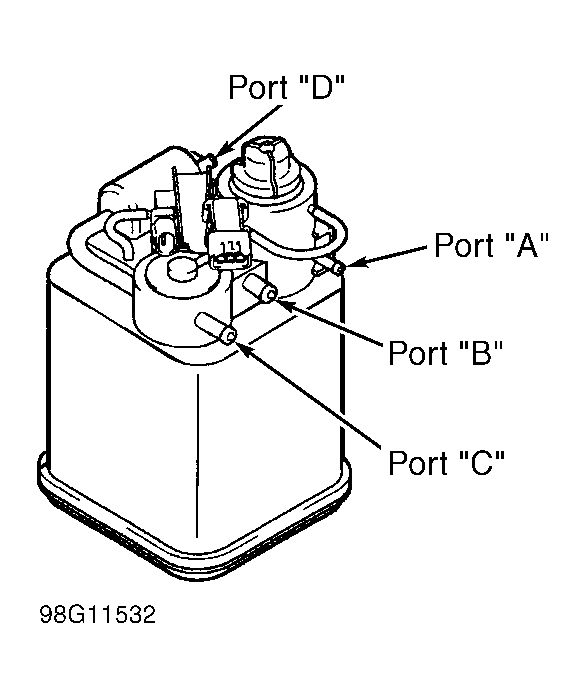 Courtesy of © TOYOTA, LICENSE AGREEMENT TMS1002