Bleeding Procedures
- ABS bleeding procedure is the same procedure used in bleeding conventional brake system. If master cylinder reservoir is empty, is suspected of containing air, or if ABS/TRAC actuator or master cylinder have been worked on, ABS/TRAC actuator and master cylinder must be bled first.
- To bleed master cylinder, disconnect brakelines from master cylinder. Slowly depress brake pedal and hold. Block off master cylinder holes and release brake pedal. Repeat this procedure 3-4 times.
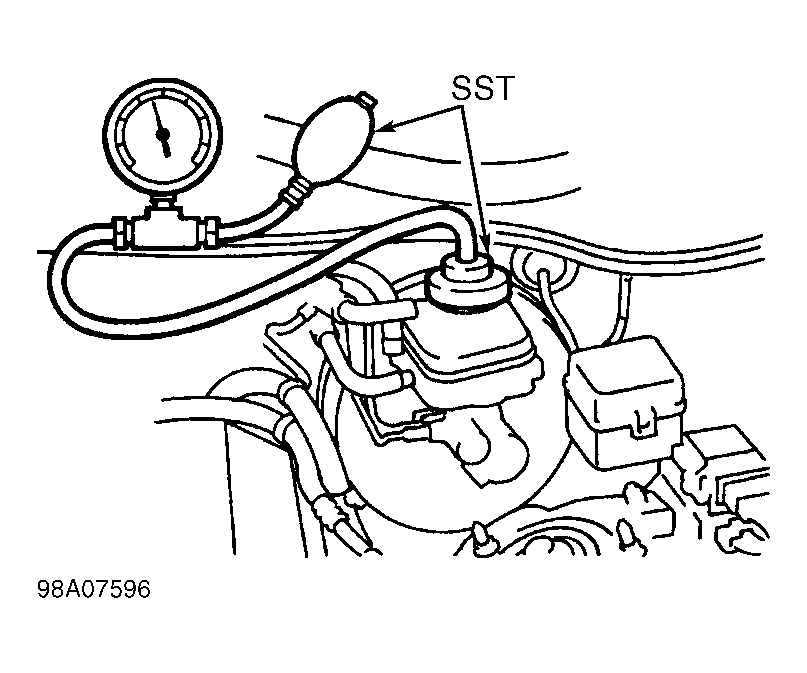
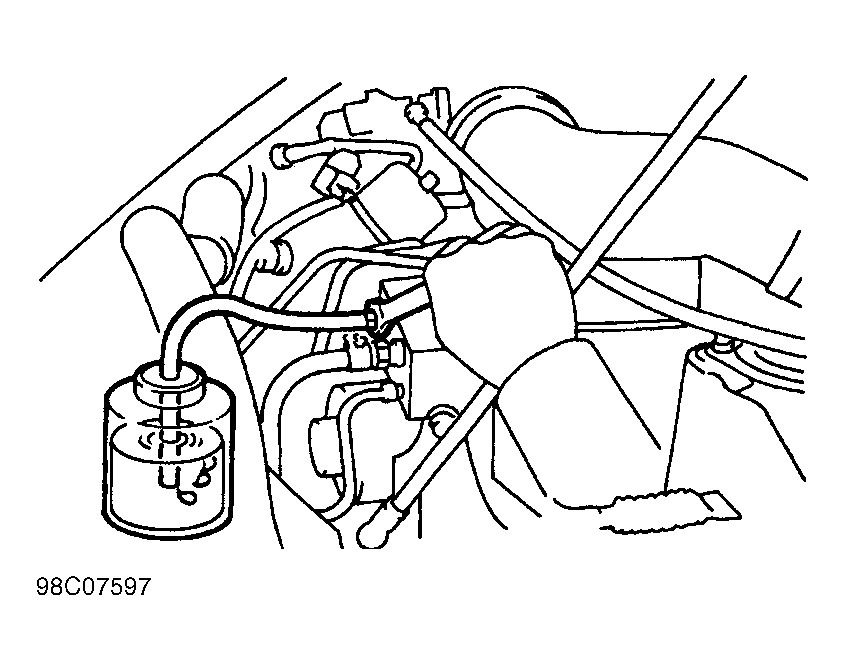
- To bleed ABS/TRAC actuator, ensure brakelines are connected. Remove master cylinder reservoir cap. Install ABS/TRAC Bleeding Tool (SST 09992-00242 and 09992-00350) onto master cylinder. See Fig 1. Connect a vinyl tube to bleeder screw of ABS/TRAC actuator. See Fig 2. Loosen bleeder screw. Using ABS/TRAC Bleeding Tool (SST 09992-00242 and 09992-00350), apply 14.2 psi (98.1 kPa) to master cylinder reservoir. Continue to apply pressure until all air has been bled from ABS/TRAC actuator. Tighten bleeder screw to 74 INCH lbs. (8.4 N.m).
- To bleed brakelines, ensure master cylinder reservoir is full of brake fluid. Connect a vinyl tube to caliper bleeder screw and insert other end of tube in a clear container 1/4 full of brake fluid. Slowly pump brake pedal several times.
- While depressing brake pedal, loosen bleeder screw until fluid starts to flow, and then close bleeder screw. Repeat operation until no bubbles are present in fluid. Tighten bleeder screw to 96 INCH lbs. (11 N.m). Repeat procedure for remaining calipers.
 Courtesy of © TOYOTA, LICENSE AGREEMENT TMS1002
 Courtesy of © TOYOTA, LICENSE AGREEMENT TMS1002