Power & Ground Circuits (Pathfinder & QX4)
- Start engine. If engine starts, go to step 11. If engine does not start, go to next step.
- Turn ignition off, and then on. Backprobing at ECM, measure voltage between ground and ECM terminal No. 43 (Red wire). See Figure and Figure
. If battery voltage exists, go to step 4. If battery voltage does not exist, go to next step.
- Check following:
- Check fuse block fuse No. 21 (10-amp).
- Check for poor, loose, corroded or damaged terminal connections in in-line harness connectors M33 and F22. See WIRING DIAGRAMS
article.
- Check for poor, loose, corroded or damaged terminal connections in fuse block harness connectors M10 and E4.
- Check for open or short in circuits between ECM and ignition switch.
If problem is found, repair as necessary. After repair, retest system.
- Turn ignition off. Disconnect ECM 116-pin harness connector. For ECM location, see Figure. Check continuity between ground and ECM harness connector terminals No. 48, 57, 106 and 108 (Black wires). See Figure. Continuity should exist. Also, check circuits for short to ground or short to voltage. If problem is found, repair as necessary. After repair, retest system. If no problem is found, leave harness connector disconnected and go to next step.
- Remove ECM relay. See Fig 1. Measure voltage between ground and ECM relay harness connector terminals No. 1 (White/Red wire) and No. 5 (Red/White wire). See Figure. If battery voltage does not exist, go to next step. If battery voltage exists, leave relay and harness connector disconnected and go to step 7.
- Check following:
- Check fuse block fuses No. 62 (7.5-amp) and No. 63 (10-amp).
- Check for open or short in circuits between ECM relay and battery.
If problem is found, repair as necessary. After repair, retest system.
- Check continuity of Blue/Black wire between ECM relay harness connector terminal No. 2 and ECM harness connector terminal No. 26. See Figure and Figure
. Continuity should exist. Also, check circuit for short to ground and short to voltage. If no problem is found, check ignition signal. See IGNITION SIGNAL CIRCUITS under IGNITION SYSTEM. If problem is found, leave relay and harness connector disconnected and go to next step.
- Check following:
- Check for poor, loose, corroded or damaged terminal connections in in-line harness connectors E1 and M1. See WIRING DIAGRAMS
article.
- Check for poor, loose, corroded or damaged terminal connections in in-line harness connectors M32 and F23.
- Check for open or short in circuits between ECM relay and ECM.
If problem is found, repair as necessary. After repair, retest system. If no problem is found, connect relay and harness connector and go to next step.
- Turn ignition off. Backprobing at ECM, measure voltage between ground and ECM terminal No. 67 (White/Red wire). See Figure and Figure
. If battery voltage does not exist, go to next step. If battery voltage exists, go to step 11.
- Check following:
- Check for poor, loose, corroded or damaged terminal connections in in-line harness connectors E1 and M1. See WIRING DIAGRAMS
article.
- Check for poor, loose, corroded or damaged terminal connections in in-line harness connectors M32 and F23.
- Check for open or short in circuits between ECM and fuse.
If problem is found, repair as necessary. After repair, retest system.
- Turn ignition on, and then off. Backprobing at ECM, measure voltage between ground and ECM terminal No. 110 and 112 (Black/White wires). Battery voltage should exist at each terminal for a few seconds after turning ignition off, then drop to about zero volts. If voltage is as specified, go to step 17. If battery voltage does not exist, go to next step. If battery voltage exists for more than a few seconds, go to step 14.
- Remove ECM relay. See Fig 1. Measure voltage between ground and ECM relay harness connector terminal No. 7 (White/Red wire). See Figure. If battery voltage does not exist, go to next step. If battery voltage exists, leave relay disconnected and go to step 14.
- Check for open or short in circuit between ECM relay and fuse block fuse No. 62. If fuse is blown, replace and retest system. If fuse is not blown, go to next step.
- Turn ignition on. Backprobing at ECM, measure voltage between ground and ECM terminal No. 12 (White/Red wire). If battery voltage does not exist, go to next step. If battery voltage exists, leave relay disconnected and go to step 16.
- Check following:
- Check for poor, loose, corroded or damaged terminal connections in in-line harness connectors E1 and M1. See WIRING DIAGRAMS
article.
- Check for poor, loose, corroded or damaged terminal connections in in-line harness connectors M94 and F23.
- Check fuse block fuse No. 21.
If problem is found, repair as necessary. After repair, retest system.
- Turn ignition off. Disconnect ECM 116-pin harness connector. For ECM location, see Figure. Check continuity of Black/White wire between ECM relay harness connector terminal No. 6 and ECM harness connector terminals No. 110 and 112. See Figure and Figure
. Continuity should exist. Also, check circuit for short to ground and short to voltage. If problem is found, repair as necessary. After repair, retest system.
- Check following:
- Check for poor, loose, corroded or damaged terminal connections in in-line harness connectors E1 and M1. See WIRING DIAGRAMS
article.
- Check for poor, loose, corroded or damaged terminal connections in in-line harness connectors M32 and F23.
- Check for open or short in circuits between ECM and ECM relay.
If problem is found, repair as necessary. After repair, retest system.
- Working with ECM relay, apply battery voltage and ground to terminals No. 1 and 2. See Figure. When battery voltage is applied, continuity should exist between terminals No. 3, 5, 6 and 7. When battery voltage is removed, continuity should not exist. If relay tests okay, go to next step. Replace relay, if test values are not as specified.
- Turn ignition off. Disconnect ECM 116-pin harness connector. For ECM location, see Figure. Check continuity between ground and ECM harness connector terminals No. 48, 57, 106 and 108 (Black wires). See Figure. Continuity should exist. Also, check circuits for short to ground or short to voltage. If problem is found, repair as necessary. After repair, retest system. If no problem is found, leave harness connector disconnected and go to next step.
- No problem is indicated at this time. Problem may be intermittent. See INTERMITTENTS
in TROUBLE SHOOTING - NO CODES article.
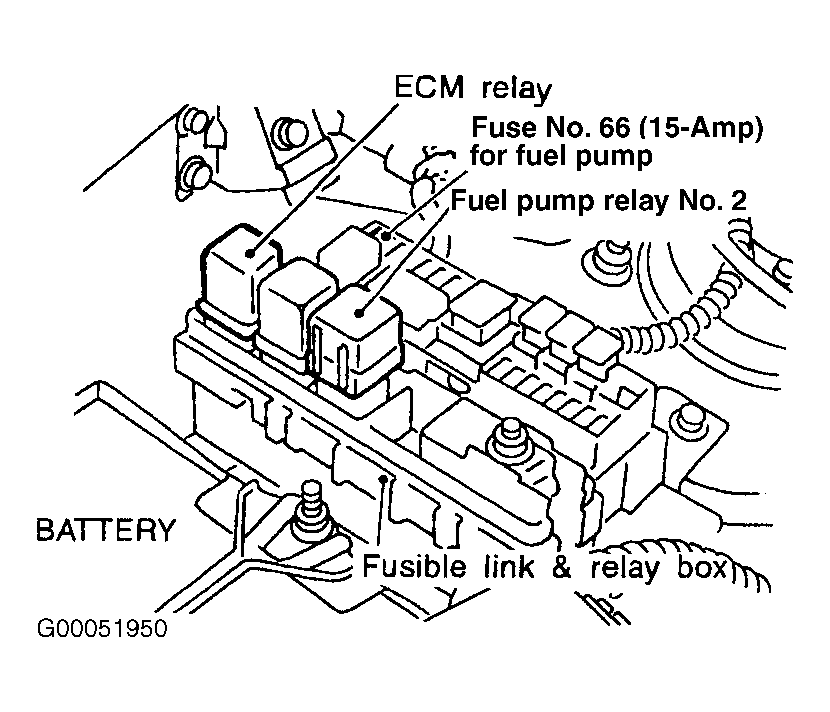 Courtesy of NISSAN MOTOR CO., U.S.A.