Exhaust Gas RECIRCULATION (EGR) System
- Inspect hose connections between intake manifold, EGR solenoid/transducer assembly, and EGR valve. Replace hardened, cracked and damaged hoses.
- Ensure engine coolant temperature is more than 150°F (66°C). Remove vacuum hose from EGR valve. See Fig 1
. Connect a hand-held vacuum pump to EGR valve. With engine idling at operating temperature, slowly apply vacuum to EGR valve. When vacuum reaches 2.0-3.5 in. Hg, engine idle will become rough or engine may stall. If engine idle does not become rough or engine does not stall, go to next step. If engine idle becomes rough or engine stalls, go to step 4).
- Remove EGR valve and EGR tube. Inspect EGR valve and EGR tube for plugged passages. Also check intake manifold inlet passage. Repair or replace components as necessary.
- Turn engine off. Connect a hand-held vacuum pump to EGR valve. Apply 15 in. Hg vacuum to EGR valve. If EGR valve holds vacuum, go to next step. If EGR valve does not hold vacuum, replace EGR valve and EGR solenoid/transducer assembly. See Fig 1
. EGR valve and EGR solenoid/transducer assembly must be replaced together because they are calibrated to match each other.
- Disconnect EGR valve backpressure vacuum hose from base of EGR valve. See Fig 1
. Remove air inlet tube from throttle body. Using compressed air regulated to 50 psi, apply 50 psi to metal backpressure fitting at base of EGR valve. Open and hold throttle valve to Wide Open Throttle (WOT). Air should not be heard coming from intake manifold.
- If air cannot be heard from intake manifold, go to next step. If air can be heard from intake manifold poppet valve is leaking in base of EGR valve. DO NOT attempt to clean EGR valve. Replace EGR valve and EGR solenoid/transducer assembly. See Fig 1
. EGR valve and EGR solenoid/transducer assembly must be replaced together because they are calibrated to match each other.
- Use scan tool to activate and verify EGR solenoid operation. After verifying solenoid operation, go to next step. If solenoid is not operating, replace EGR valve and EGR solenoid/transducer assembly. See Fig 1
. EGR valve and EGR solenoid/transducer assembly must be replaced together because they are calibrated to match each other.
- Disconnect backpressure hose from EGR transducer. See Fig 1
. Connect a hand-held vacuum pump to EGR transducer bottom nipple. Apply 10 in. Hg vacuum. If vacuum holds, go to next step. If vacuum does not hold, replace EGR valve and EGR solenoid/transducer assembly. EGR valve and EGR solenoid/transducer assembly must be replaced together because they are calibrated to match each other.
- Reconnect backpressure hose to EGR transducer. Remove vacuum hose from EGR solenoid inlet nipple. See Fig 1
. Connect a vacuum gauge to disconnected vacuum hose. Start engine and allow to reach normal operating temperature. Hold engine speed at 1500 RPM. Vacuum gauge should indicate full manifold vacuum. If full manifold vacuum is present, go to next step. If full manifold vacuum is not present, replace vacuum hose or repair plugged manifold nipple as necessary.
- Reconnect vacuum hose to EGR solenoid. Disconnect vacuum hose between EGR solenoid and EGR valve at EGR solenoid. See Fig 1
. Connect a vacuum gauge to EGR solenoid nipple. Disconnect EGR solenoid electrical connector (this will simulate an open circuit). Start engine and allow to reach operating temperature.
- Raise and hold engine speed at 2000 RPM. As a temporary backpressure is built, vacuum gauge should indicate full manifold vacuum. As backpressure drops off and engine speed is still at 2000 RPM, vacuum gauge reading should be low. A low reading is normal. Let engine idle. At idle vacuum gauge reading will be erratic. An erratic reading is normal.
- If vacuum gauge responds as specified, EGR system if functioning properly. If vacuum gauge did not respond as specified, replace EGR valve and EGR solenoid/transducer assembly. See Fig 1
. EGR valve and EGR solenoid/transducer assembly must be replaced together because they are calibrated to match each other.
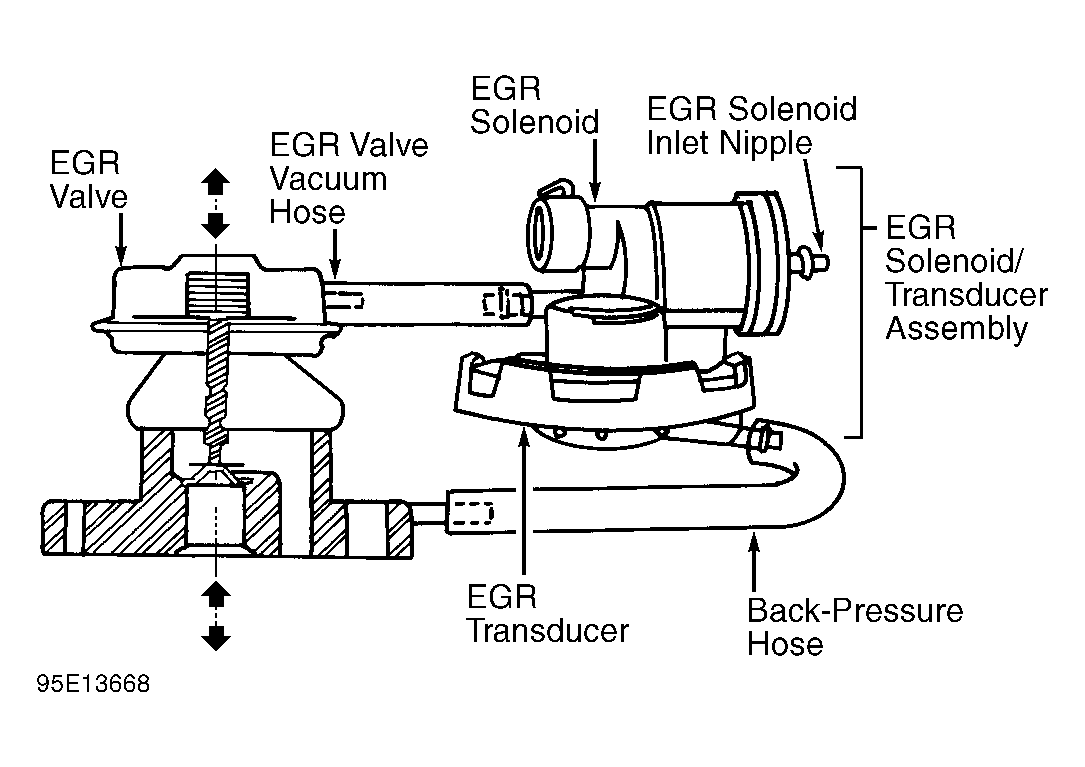 Courtesy of CHRYSLER CORP.