System Test
- Check condition of fuse link, battery terminals, battery cables, connections and belt tension. Make any required corrections. Ensure battery is in good condition and is fully charged. Go to next step.
- Connect voltmeter to battery posts. Record voltmeter indication as base voltage. Start and run engine at 1500 RPM with no electrical load. Read voltmeter when voltage stabilizes. If there is no voltage increase, or if voltage increases to less than .5 volt greater than base voltage, go to step 4). If voltage increase is no greater than 2.0 volts, go to step 3). If voltage increase is greater than 2.0 volts, go to step 10).
- Load alternator by switching heater/air conditioner blower motor to high speed and headlights to high beam. Increase engine speed to 2000 RPM. Voltmeter should indicate at least .5 volt higher than base voltage. If voltage increase is within specification, alternator operation is normal. If voltage increases to less than .5 volt higher than base voltage, go to step 4).
- Unplug connector from voltage regulator. Measure resistance between regulator "A" and "F" terminals. If resistance is greater than 2.4 ohms, go to step 5). If resistance is not greater than 2.4 ohms, replace voltage regulator.
- Connect wiring to regulator. Connect voltmeter negative lead to rear alternator housing. Connect voltmeter positive lead to terminal "A" screw of regulator. See Fig 1. Meter should indicate battery voltage. If battery voltage is not present, service "A" circuit wiring.
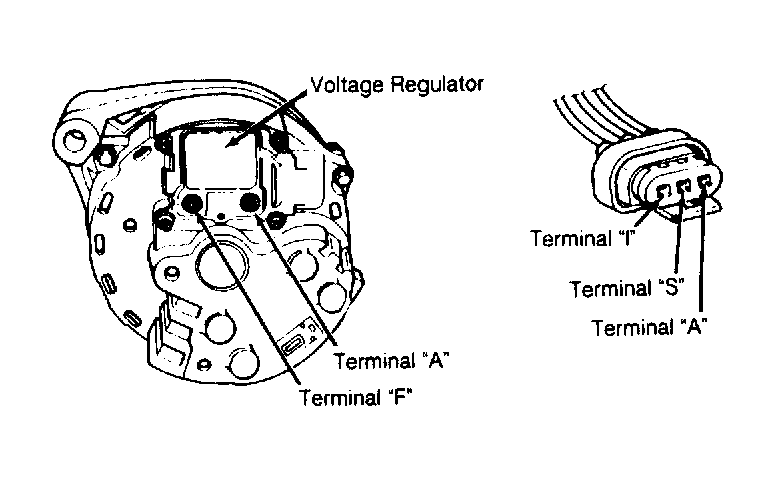 Courtesy of FORD MOTOR CO.
- With ignition off, connect voltmeter positive lead to terminal "F" screw of regulator. If battery voltage is present, go to step 7). If battery voltage is not present, repair or replace alternator.
- Set ignition switch to ON position (engine not running). If meter indicates more than 1.5 volts, go to step 8). If meter indicates less than 1.5 volts, go to step 9).
- Unplug alternator wiring connector. Connect 12-gauge jumper wires between alternator "B+" terminals and mating connector terminals. See Fig 2. Connect voltmeter positive lead to "B+" terminal on alternator. Repeat step 3). If voltage increases to greater than .5 volt more than base voltage, repair wiring harness from alternator to starter relay. If increase is less than .5 volt, go to step 9).
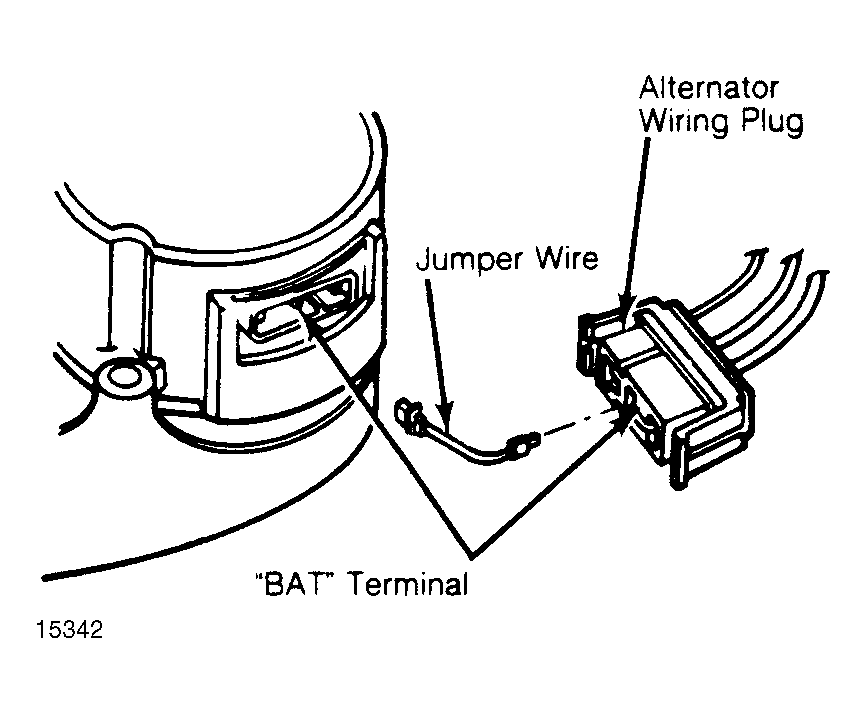 Courtesy of FORD MOTOR CO.
- Connect jumper wire from rear alternator housing to terminal "F" screw of regulator. Repeat step 3). If voltage increase is greater than 0.5 volt more than base voltage, replace regulator. If voltage increase is not greater than .5 volt more than base voltage, repair or replace alternator.
- With engine off and ignition on, measure voltage at voltage regulator terminal "F" and at starter relay. If difference between readings is .5 volt or less, go to step 11). If difference between readings is greater than .5 volt, repair "A" circuit wiring.
- Check for loose voltage regulator ground screws, poor engine ground, or poor alternator ground. Repair as necessary. If screws are okay, go to next step.
- With ignition off, measure voltage at voltage regulator "A" and "F" terminals. If battery voltage does not exist at each terminal, repair or replace alternator. If battery voltage exists at each terminal, replace voltage regulator.