AUTOLOCK Does Not Work
- Disconnect door lock control module 13-pin connector C245 and 13-pin connector C254. Measure resistance between ground and 13-pin connector C245 terminal No. 1. See Fig 1
. Measure resistance between ground and 13-pin connector C245 terminal No. 15. If resistance is 5 ohms or less, go to next step. If resistance is more than 5 ohms, repair open in Black wire between terminals No. 1 and 15.
- Disconnect door lock control module 16-pin connector C235. Measure resistance between ground and 16-pin connector C235 terminal No. 5. See Fig 2
. If resistance is 5 ohms or less, go to next step. If resistance is more than 5 ohms, repair open in Black/White wire.
- Press and release brake pedal once. If brake lights come on, go to next step. If brake lights do not come on, repair brake switch or related wiring.
- Disconnect anti-theft control if equipped. Press brake pedal and measure resistance between ground and door lock control module 16-pin connector C235 terminal No. 14. If resistance is less than 100 ohms, go to next step. If resistance is 100 ohms or more, repair brake switch or related wiring.
- Disconnect brake switch. Measure resistance between ground and door lock control module 16-pin connector C235 terminal No. 14. If resistance is more than 10 k/ohms, go to next step. If resistance is 10 k/ohms or less, repair Red/Light Green wire.
- Measure voltage between 16-pin connector C235, terminals No. 1 and 5. See Fig 2
. If reading is more than 9 volts, go to next step. If reading is 9 volts or less, repair open or short in Red/White wire.
- Measure voltage between 13-pin connector C245, terminal No. 1 and 13-pin connector C254, terminal No. 14. See Fig 1
and Fig 3
. Measure voltage between 13-pin connector C245, terminal No. 15 and 13-pin connector C254, terminal No. 25. If reading is more than 9 volts, go to next step. If reading is 9 volts or less, repair open or short in Black/White wire.
- Ensure front doors are closed. Measure resistance between ground and 16-pin connector C235, terminal No. 9. If resistance is 5 ohms or less, go to next step. If resistance is more than 5 ohms, repair short in Orange/White wire or door ajar switch.
- Check for continuity between ground and 16-pin connector C235, terminal No. 9 while each door is opened and closed. If continuity exists for each door opened, and no continuity exists when doors are closed, go to next step. If continuity is not as specified, repair Orange/White wire or door ajar switch.
- Turn ignition off. Measure voltage between ground and 16-pin connector C235, terminal No. 6. If reading is zero volts, go to next step. If reading is more than zero volts, replace ignition switch.
- Turn ignition on. Measure voltage between ground and 16-pin connector C235, terminal No. 6. If reading is less than 10 volts, go to next step. If reading is 10 volts or more, go to step 13).
- Turn ignition off. Measure resistance between ground and 16-pin connector C235, terminal No. 6. If resistance is 5 ohms or less, go to next step. If resistance is more than 5 ohms, repair Yellow/Black wire or ignition switch.
- Turn ignition on. Measure voltage between ground and 16-pin connector C235, terminal No. 16. If reading is 10 volts with transmission in reverse, replace door lock control module. If reading is other than 10 volts, go to next step.
- Test Transmission Range (TR) sensor. See AUTO TRANS DIAGNOSIS article in AUTO TRANS DIAGNOSIS section. Replace TR sensor if necessary. If TR sensor is okay, repair open or short in Black/Pink wire.
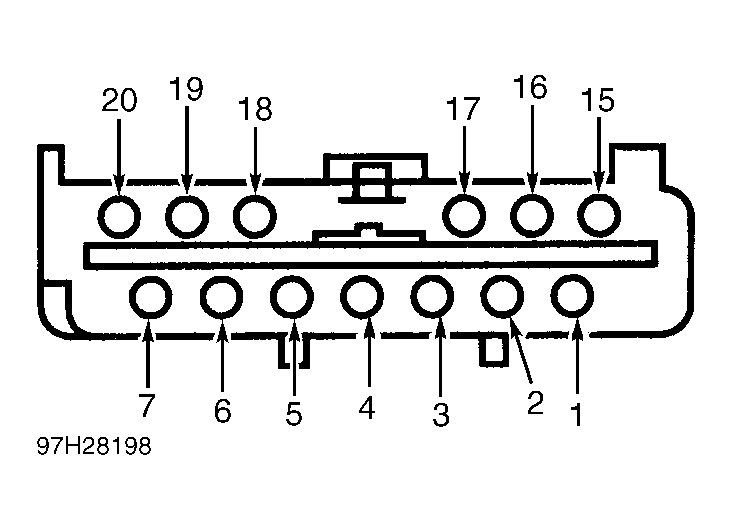 Courtesy of FORD MOTOR CO.
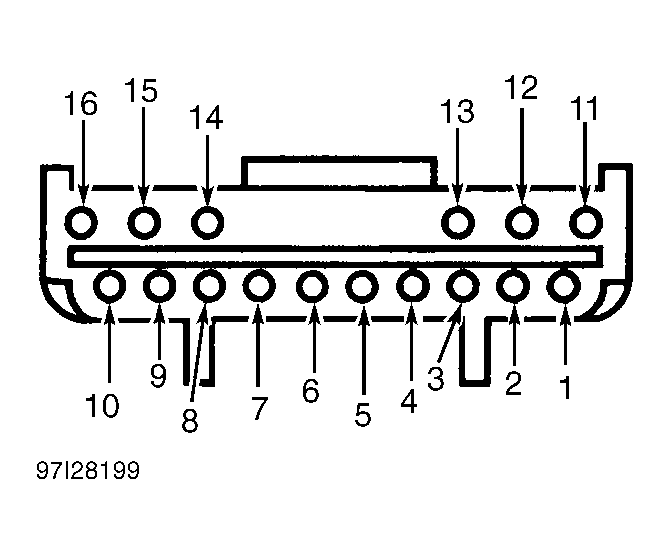 Courtesy of FORD MOTOR CO.
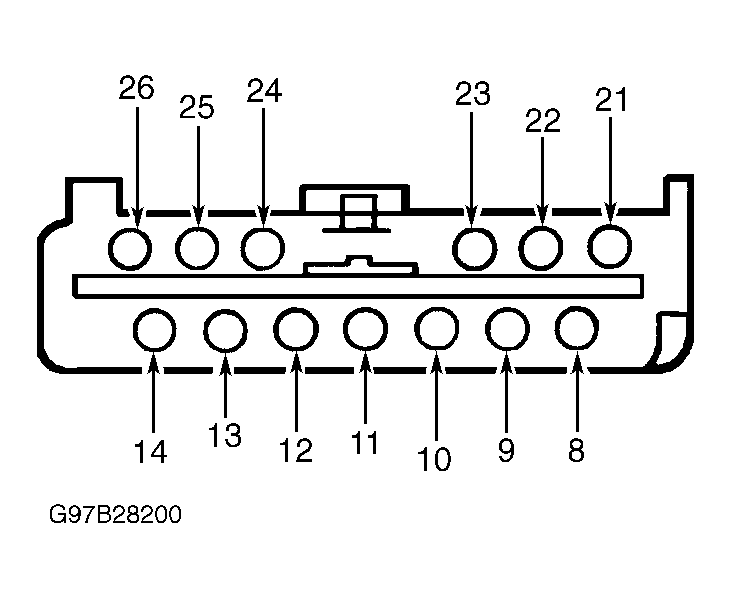 Courtesy of FORD MOTOR CO.