Pinpoint Test K: The Traction Control System Cannot Be Disabled: Testing
- K1 MONITOR THE INSTRUMENT CLUSTER PID
- Connect the diagnostic tool.
- Key in ON position.
- Enter the following diagnostic mode on the diagnostic tool: Instrument Cluster Traction Control Status PID.
- Monitor the instrument cluster traction control switch status PID and the traction control disable indicator while pressing the traction control disable switch repeatedly.
- Does the PID agree with the switch position, and does the traction control disable indicator match?
- Yes
: The system is operating correctly at this time.
- No
: GO to K2.
- K2 CHECK CIRCUIT 1412 (WH/PK) FOR A SHORT TO GROUND
- Key in OFF position.
- Disconnect: Traction Control Switch C2114.
- Disconnect: Instrument Cluster C220.
- Measure the resistance between the traction control switch C2114-2, circuit 1412 (WH/PK), harness side and ground.
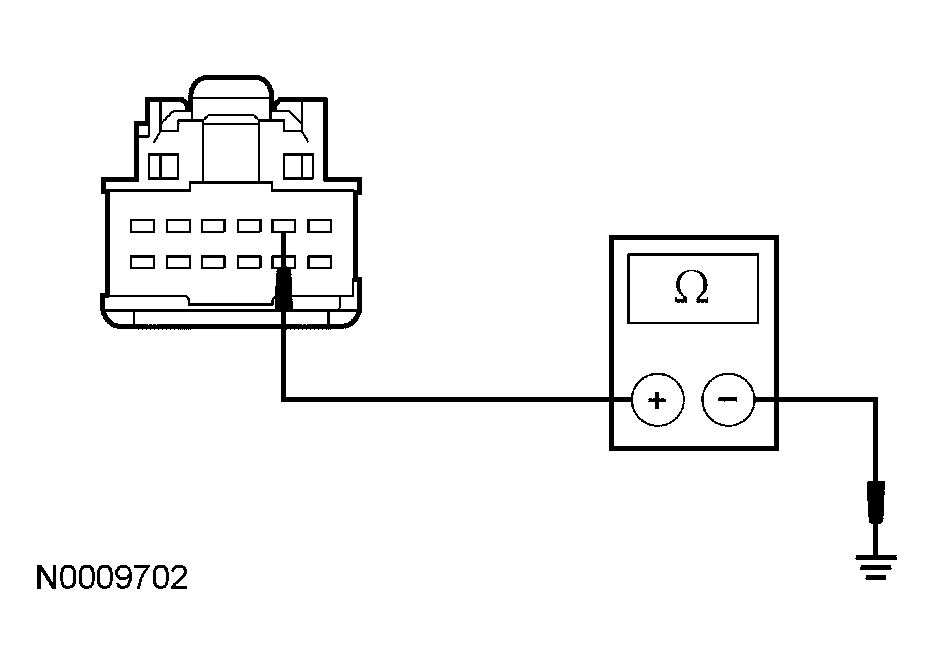 Courtesy of FORD MOTOR CO.
- Is the resistance greater than 10,000 ohms?
- Yes
: GO to K3.
- No
: REPAIR the circuit. CLEAR the DTCs. REPEAT the self-test.
- K3 CHECK THE TRACTION CONTROL SWITCH INPUT
- Connect: Traction Control Switch C2114.
- Make sure the traction control switch is not pressed (traction control not disabled).
- Measure the resistance between the instrument cluster C220-9, circuit 1412 (WH/PK), harness side and ground.
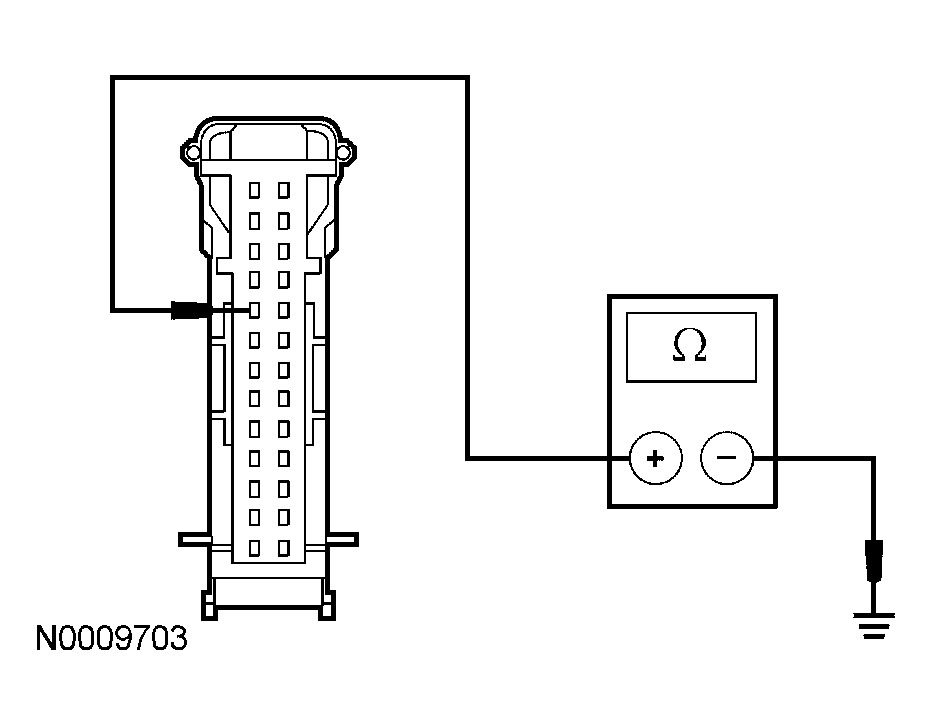 Courtesy of FORD MOTOR CO.
- Is the resistance greater than 10,000 ohms?
- Yes
: GO to K4.
- No
: INSTALL a new traction control switch. CLEAR the DTCs. REPEAT the self-test.
- K4 CHECK THE TRACTION CONTROL SWITCH OPERATION
- Key in OFF position.
- Disconnect: Instrument Cluster C220.
- Measure the resistance between the instrument cluster C220-9, circuit 1412 (WH/PK), harness side and ground while pressing the traction control switch.
Courtesy of FORD MOTOR CO.
- Is the resistance less than 5 ohms?
- Yes
: GO to K7.
- No
: GO to K5.
- K5 CHECK CIRCUIT 1412 (WH/PK) FOR AN OPEN
- Disconnect: Traction Control Switch C2114.
- Measure the resistance between the instrument cluster C220-9, circuit 1412 (WH/PK), harness side and the traction control switch C2114-2, circuit 1412 (WH/PK), harness side.
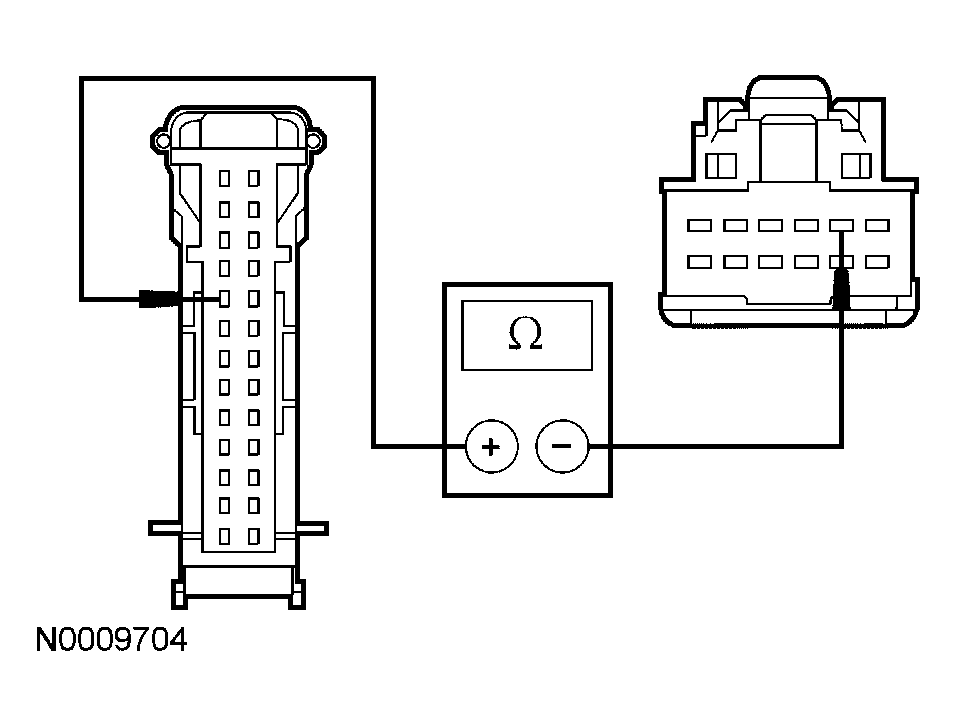 Courtesy of FORD MOTOR CO.
- Is the resistance less than 5 ohms?
- Yes
: GO to K6.
- No
: REPAIR the circuit. CLEAR the DTCs. REPEAT the self-test.
- K6 CHECK CIRCUIT 1205 (BK) FOR AN OPEN
- Measure the resistance between the traction control switch C2114-4, circuit 1205 (BK), harness side and ground.
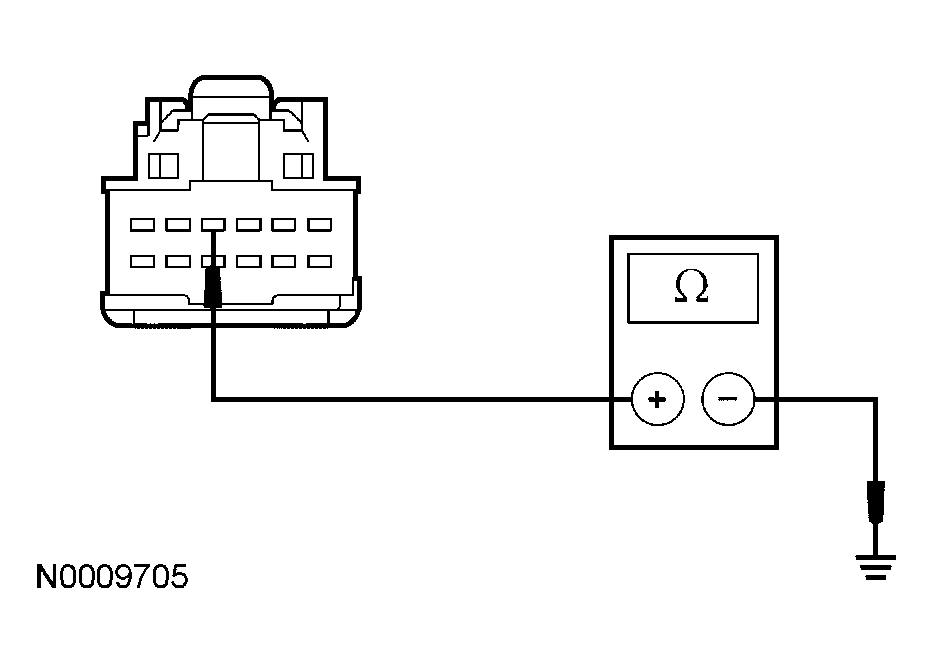 Courtesy of FORD MOTOR CO.
- Is the resistance less than 5 ohms?
- Yes
: INSTALL a new traction control switch. CLEAR the DTCs. REPEAT the self-test.
- No
: REPAIR the circuit. CLEAR the DTCs. REPEAT the self-test.
- K7 CHECK FOR CORRECT INSTRUMENT CLUSTER OPERATION
- Disconnect the instrument cluster connector.
- Check for:
- corrosion
- pushed-out pins
- Connect the instrument cluster connector and make sure it seats correctly.
- Operate the system and verify the concern is still present.
- Is the concern still present?
- Yes
: INSTALL a new instrument cluster. REFER to INSTRUMENT CLUSTER
. CLEAR the DTCs. REPEAT the self-test.
- No
: The system is operating correctly at this time. The concern may have been caused by a loose or corroded connector. CLEAR the DTCs. REPEAT the self-test.