Principles of Operation
Climate Control System
Principles of Operation
Compressor Anti-Slugging Strategy (CASS)
Liquid refrigerant may accumulate in the A/C compressor under certain conditions. To alleviate damage to the A/C compressor, CASS is utilized.
CASS is initiated only under specific conditions:
- The ignition is off for more than 8 hours
- The ambient temperature is above -4°C (25°F)
- Battery voltage is above 8.5 volts during engine cranking
When these conditions are present, the PCM will activate the A/C control relay prior to cranking of the engine. The A/C control relay engages the A/C compressor for approximately 4-15 A/C compressor revolutions or a maximum of 2 seconds (depending upon vehicle application), allowing the liquid refrigerant to be pushed from the A/C compressor. CASS is initiated by the PCM regardless of the function selector switch position.
The Refrigerant Cycle
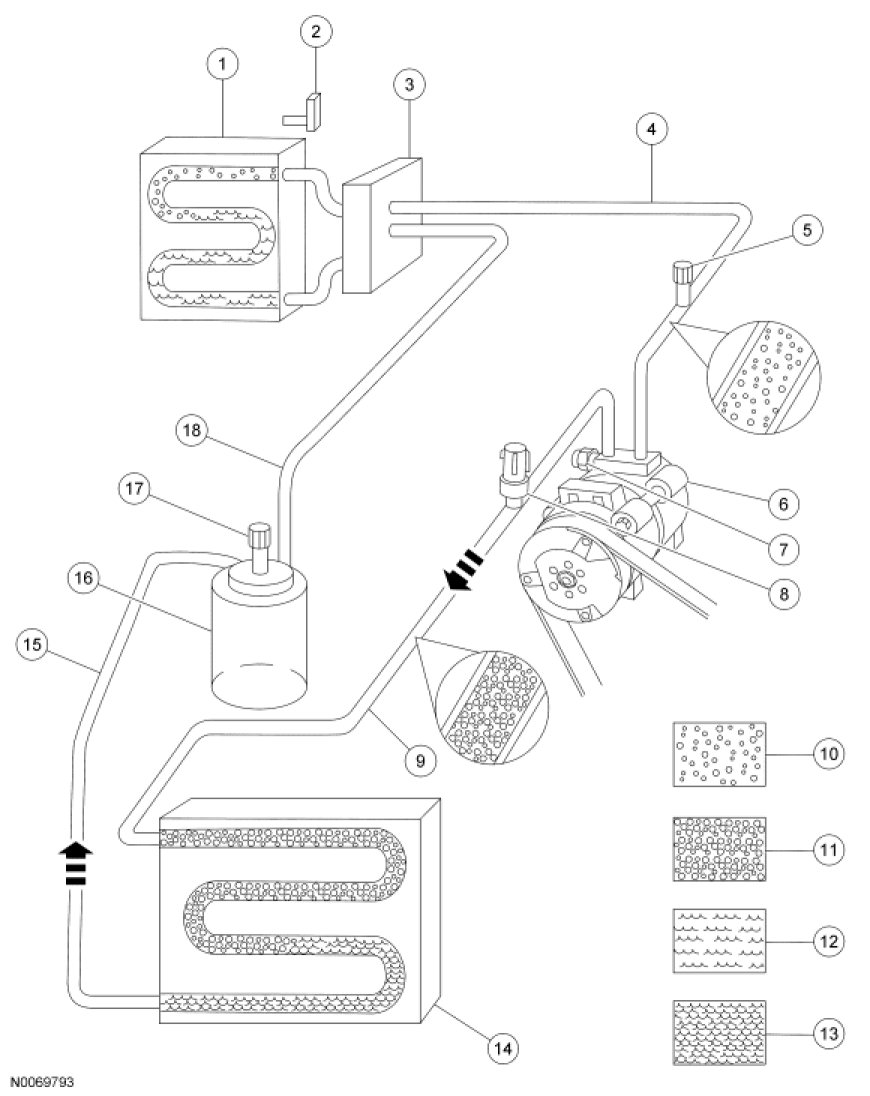
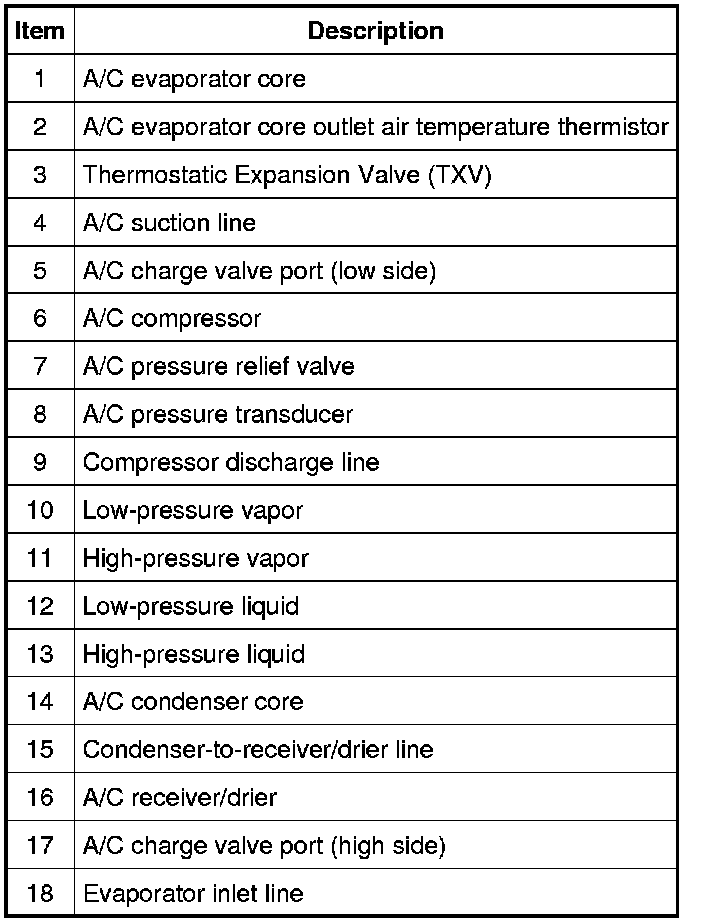
A thermistor which monitors the temperature of the air that has passed through the evaporator core controls A/C clutch cycling. If the temperature of the evaporator core discharge air is low enough to cause the condensed water vapor to freeze, the A/C clutch is disengaged by the vehicle PCM.
The high-side line pressure is also monitored so that A/C compressor operation will be interrupted if the system pressure becomes too high or is determined to be too low (low charge condition).
The A/C compressor thermal protection switch will interrupt compressor operation if the compressor housing exceeds temperature limits.
The A/C compressor relief valve will open and vent refrigerant to relieve unusually high system pressure.
Thermostatic Expansion Valve (TXV) Type Refrigerant System