Circuit Identification For In-Line and Fuse Box Connectors
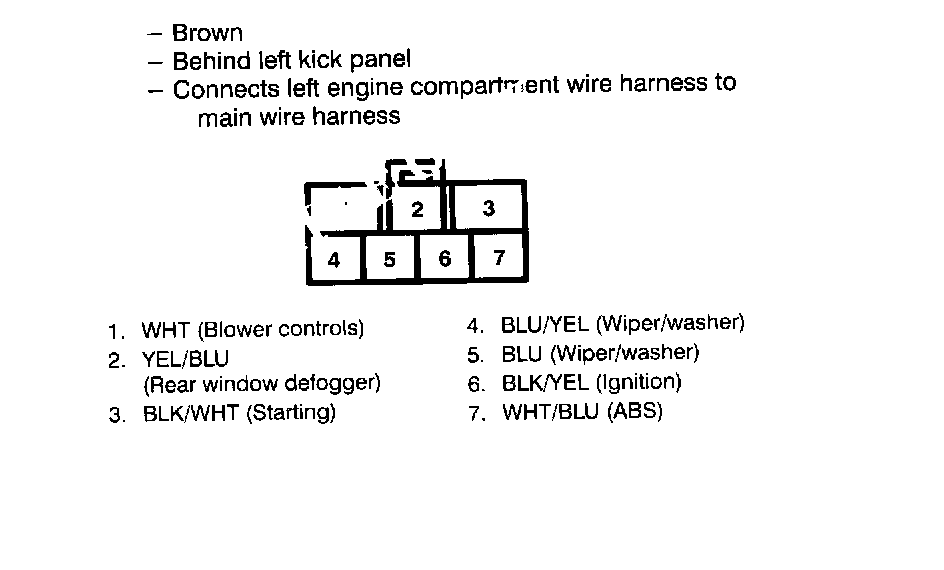
To see the configuration of a connector's cavities, look up its view number in Cavity Numbering System. Each view includes the color of the connector, where it is located, and what it connects to.
Use the Connector Views to help locate the proper cavity when you need to probe a connector. It can be especially helpful if the connector has more than one wire of the same color. A dash symbol (-) indicates that the cavity is empty.
Connector views can also be used to help diagnose multiple symptoms in separate circuits which could be caused by a single problem in a connector shared by those circuits. Here's how:
1. Pick one of the multiple symptoms and look up the schematic for that circuit.
2. Make a list of all the in-line and fuse box connectors in that schematic.
3. Then, in Cavity Numbering System, look up each connector on your list to see if circuits related to the other symptoms run through one of them. If they do, inspect that connector for the problem.
Example: The blower, rear window defogger, and the windshield wiper don't work. List all in-line and fuse box connectors in the blower controls circuit and then check the Cavity Numbering System (sample below). You find that C324 is common to the rear window defogger circuit and wiper/washer circuit, so you inspect C324 and find the problem, bent terminals.