System Inspection
- Inspect fuses No. 5 and 13. Replace faulty fuses as needed. Remove A/C relay. See Fig 1
. Turn ignition on. Using DVOM, measure voltage between relay receptacle terminal No. 4 (Red/Yellow wire) and vehicle ground. If voltage is less than battery voltage, inspect and repair circuit as needed.
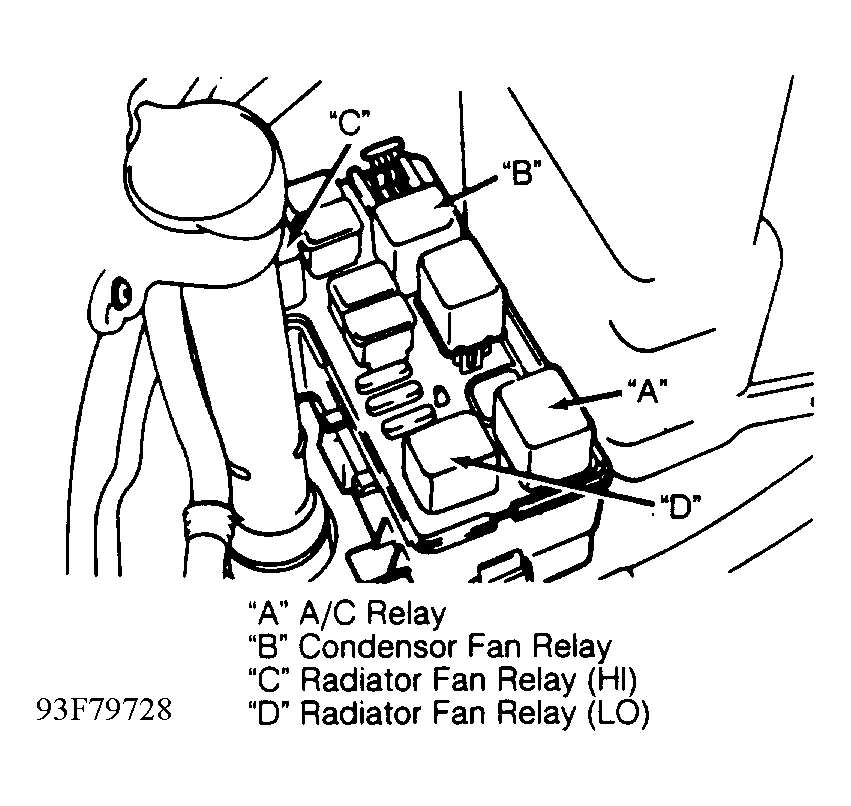 Courtesy of HYUNDAI MOTOR CO.
- Connect jumper wire between relay receptacle terminal No. 4 (Red/Yellow Wire) and terminal No. 2 (Black/White wire). Compressor clutch should engage. If clutch engages, go to step 4). If clutch does not engage, disconnect harness connector at compressor clutch. Using DVOM, measure voltage between clutch connector terminal No. 1 (Black/White wire) and vehicle ground.
- If voltage is less than battery voltage, inspect and repair circuit between A/C clutch and relay receptacle as needed. If voltage is within specification, inspect and repair A/C compressor clutch as needed. See the A/C COMPRESSOR SERVICING article.
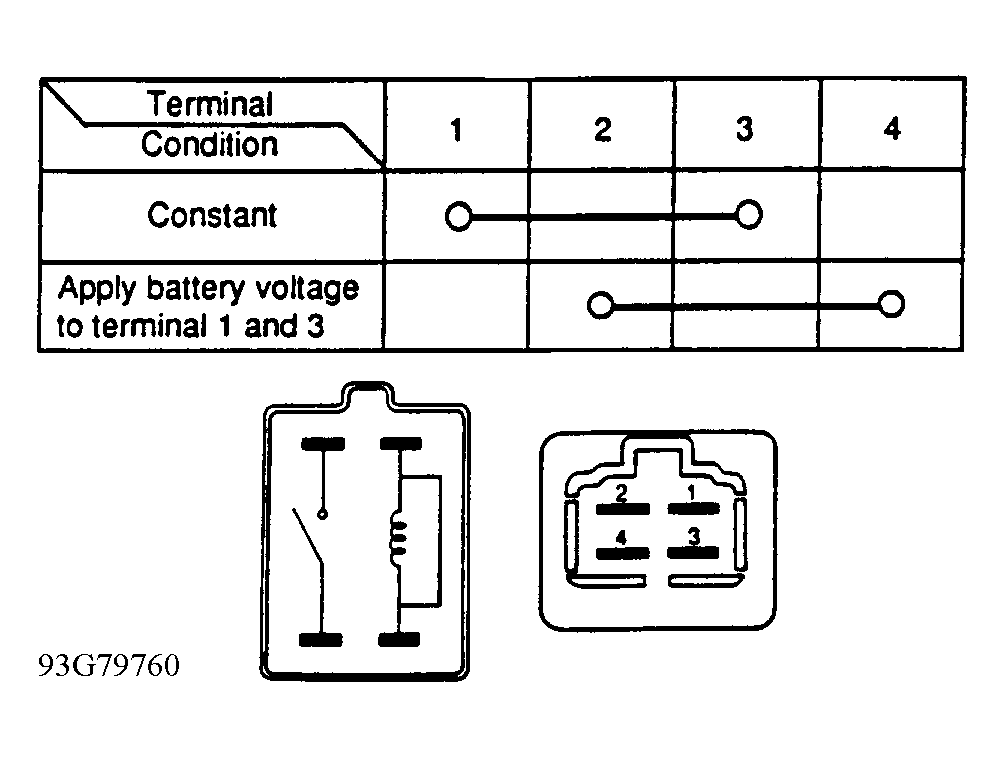
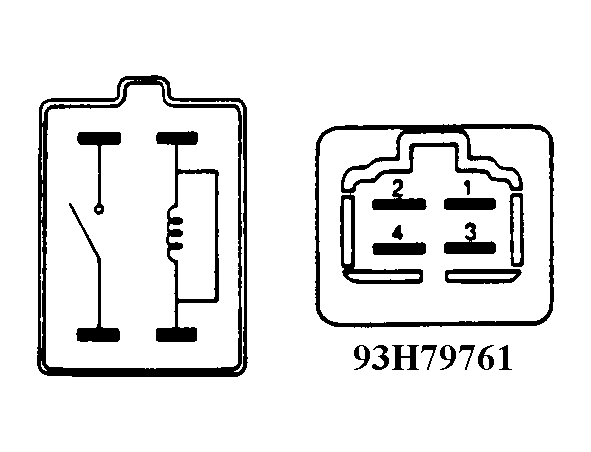
- Measure voltage between relay receptacle No. 1 (Black/Blue wire) and vehicle ground. If voltage is less than battery voltage, inspect and repair circuit as needed. Perform continuity check on A/C relay. See Fig 2
and Fig 3
. Replace relay as needed.
 Courtesy of HYUNDAI MOTOR CO.
 Courtesy of HYUNDAI MOTOR CO.
- Turn ignition off. Install A/C relay. Disconnect ECM harness connector. Connect jumper wire between ECM harness connector terminal No. 32 (Black/Red wire) and vehicle ground. See Figure
. Turn ignition on. If compressor does not engage, inspect and repair circuit as needed.
- Turn on A/C and blower switch. Using DVOM, measure voltage between ECM harness connector terminal No. 40 (Black/White wire) and vehicle ground. See Figure
. If voltage is less than battery voltage, go to step 7). If battery voltage is present, substitute ECM with known good unit and retest system.
- Turn ignition off. Connect ECM harness connector. Disconnect dual pressure switch harness connector. Turn on A/C and blower switch. Using DVOM, measure voltage between pressure switch harness connector terminal No. 2 (Black/Blue wire) and vehicle ground.
- If voltage is less than battery voltage, go to step 10). If battery voltage is present, turn ignition off. Connect jumper wire between dual pressure switch terminals. Start engine. Turn on A/C and blower motor switches. If compressor does not operate, inspect and repair circuit between pressure switch and ECM terminal No. 40.
- If compressor operates, remove jumper wire and connect pressure switch harness connector. If compressor fails to continue to operate, check A/C system refrigerant charge. See the A/C COMPRESSOR SERVICING article. Ensure all safety procedures are followed. If refrigerant level is okay, replace dual pressure switch and recheck system.
- Turn ignition off. Connect dual pressure switch harness connector. Disconnect thermostat switch harness connector. Connect jumper wire between thermostat switch terminals. Start engine. Turn on A/C and blower switches. If compressor does not operate, inspect and repair circuit between pressure switch and ECM terminal No. 40.
- If compressor operates, remove jumper wire and connect thermostat switch harness connector. Retest system. Replace thermostat switch if compressor will not engage. If after all testing procedures have been completed, system is still inoperative, substitute ECM with known good unit and retest.