Vapor Pressure Sensor
- Ensure ignition is off. To test vapor pressure sensor supply voltage, disconnect electrical connector at vapor pressure sensor. Sensor is located on rear corner of charcoal canister and contains a Black 3-pin connector. See Figure.
- Turn ignition on. Using voltmeter, measure voltage between terminals VC (Blue/Red wire) and E2 (Brown/White wire) on wiring harness side of electrical connector for vapor pressure sensor. Supply voltage should be 4.5-5.5 volts, .
- If supply voltage is not within specification, check wiring circuit. See appropriate wiring diagram in WIRING DIAGRAMS article. If supply voltage is within specification, turn ignition off. Reinstall electrical connector on vapor pressure sensor.
- To test vapor pressure sensor output voltage, turn ignition on. Disconnect vacuum hose from vapor pressure sensor. See Fig 1.
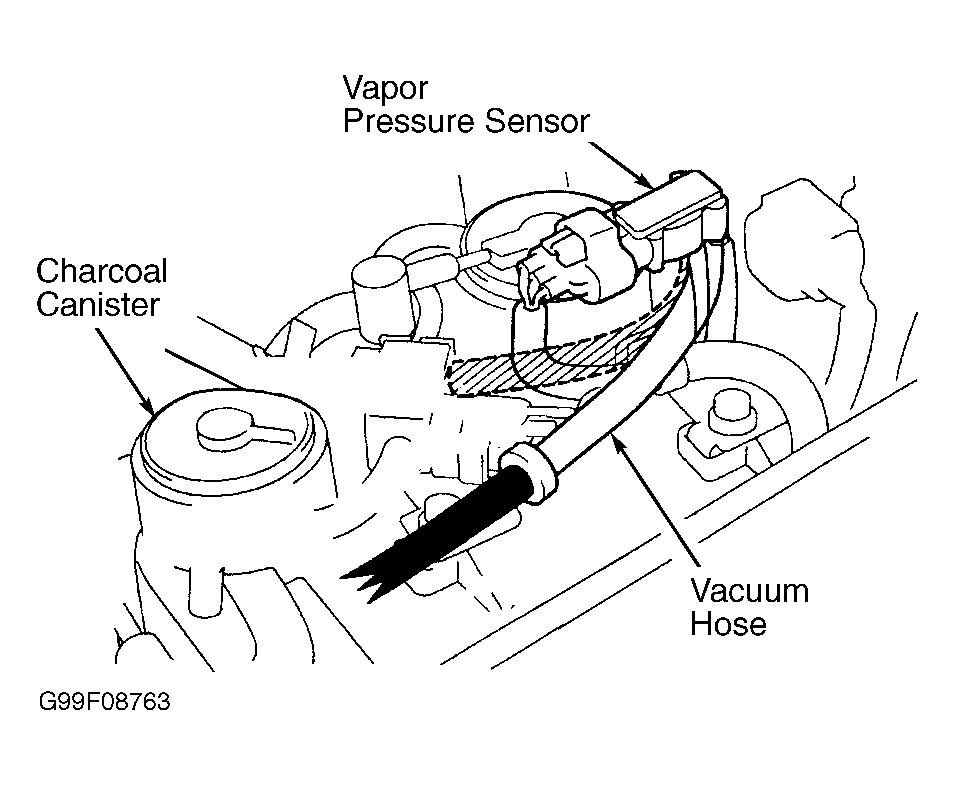 Courtesy of © TOYOTA, LICENSE AGREEMENT TMS1002
- Access Engine Control Module (ECM) behind glove box. Connect voltmeter between terminals E2 (Brown/White wire) and PTNK (Blue/Black wire) at ECM connector. See Fig 2.
- Using vacuum pump, apply .59 in. Hg of vacuum to vapor pressure sensor. Output voltage should be 1.3-1.2 volts. Release vacuum from vapor pressure sensor. Output voltage should be 3.0-3.6 volts. Apply .22 psi (.015 kg/cm2
) to vapor pressure sensor. Output voltage should be 4.2-4.8 volts. Replace vapor sensor if any output voltage is not as specified. Reconnect vacuum hose.
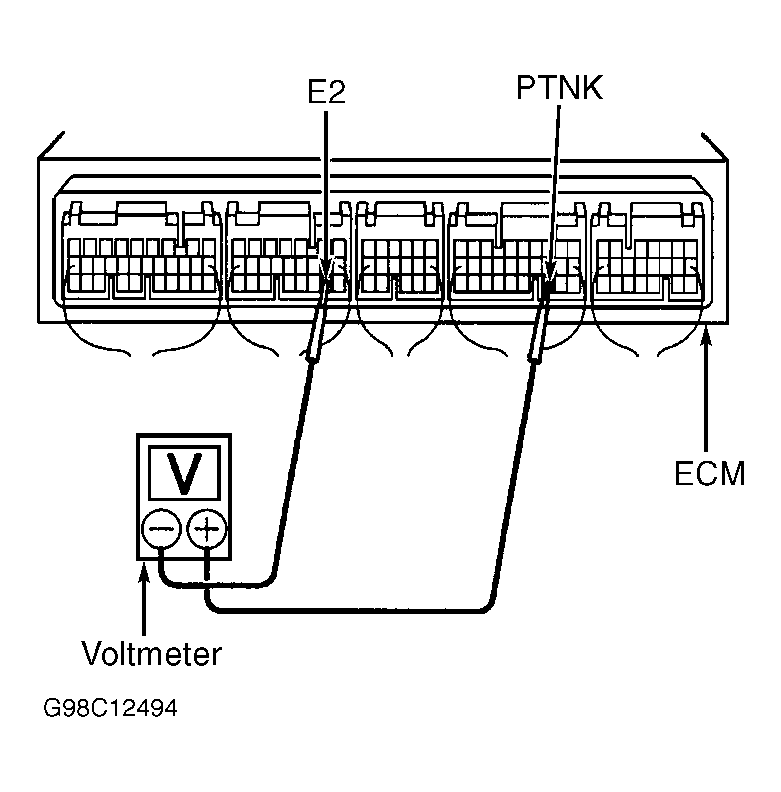 Courtesy of © TOYOTA, LICENSE AGREEMENT TMS1002