- Move the vehicle to an isolated spot.
WARNING:
Wait at least 60 seconds after disconnecting the battery cables before doing any further work (Refer to SERVICE PRECAUTIONS
).
WARNING:
Battery posts, terminals and related accessories contain lead and lead compounds. WASH HANDS AFTER HANDLING.
- Disconnect the negative (-) and positive (+) battery cables from the battery terminals, and then remove the battery from the vehicle.
- Remove the glove box (Refer to
INSTRUMENT PANEL
).
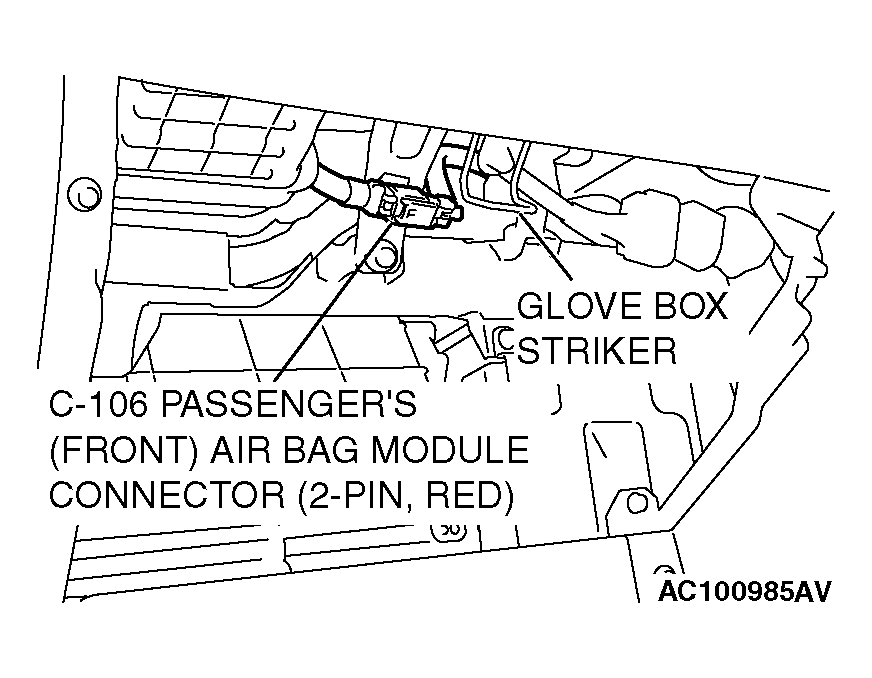
- Remove the connection between the C-106 passenger's (front) air bag module connector (two-pin, red) and the instrument panel wiring harness connector (two-pin, red).
NOTE:
If the air bag module connector is disconnected from the instrument panel wiring harness, both electrodes of the air bag module connector will be automatically shorted to prevent unintended deployment of the air bag due to static electricity, etc.
 Courtesy of MITSUBISHI MOTOR SALES OF AMERICA.
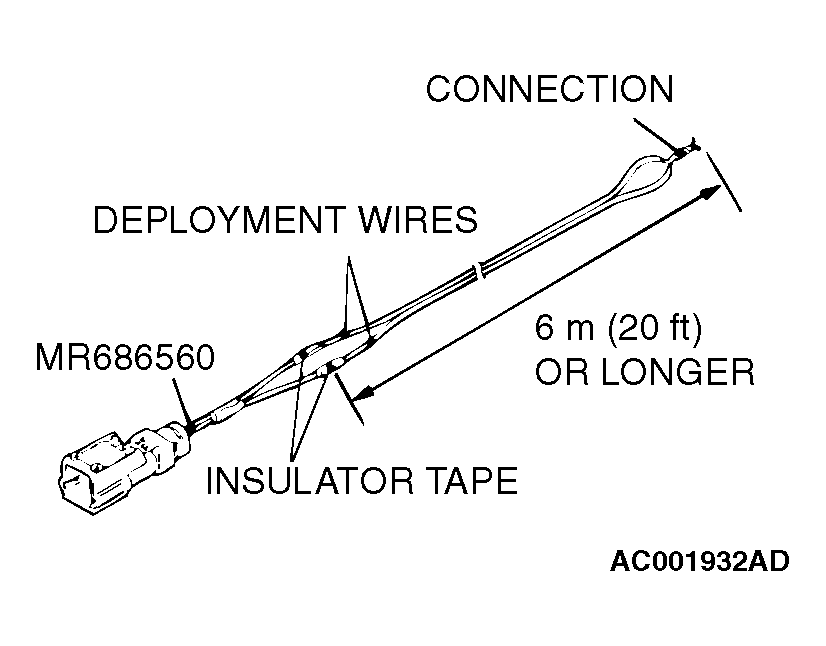
- Connect deployment wires, each 6 meters (20 feet) or longer, to the two leads of special tool MB686560, and cover the connections with insulator tape. The other ends of the deployment wires should be connected to each other (short-circuited), to prevent sudden unexpected deployment of the air bag module.
 Courtesy of MITSUBISHI MOTOR SALES OF AMERICA.
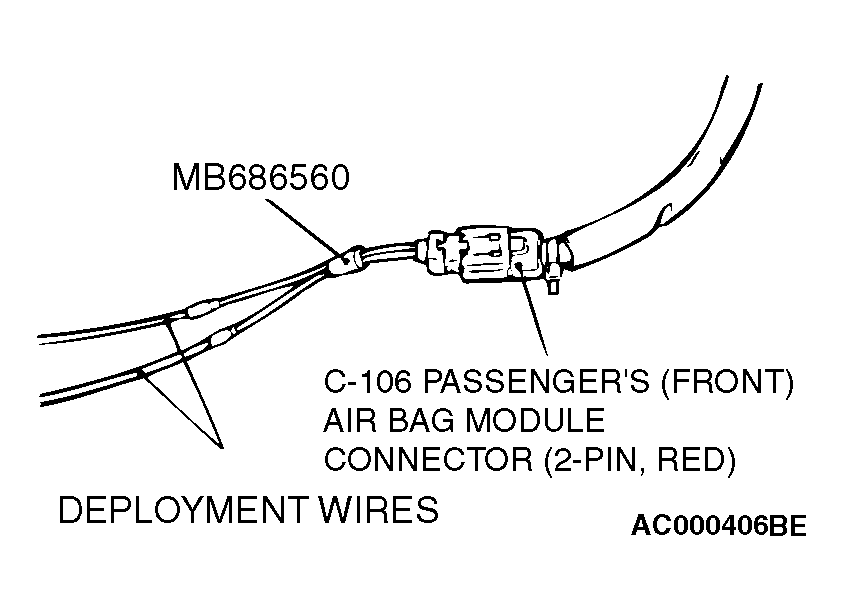
- Connect the C-106 passenger's (front) air bag module connector (two-pin, red) to special tool MB686560 and move the deployment wires out of the vehicle.
 Courtesy of MITSUBISHI MOTOR SALES OF AMERICA.
WARNING:
If the glass is scratched, air bag deployment could cause it to crack and fly out of the vehicle, so always put a cover over the vehicle.
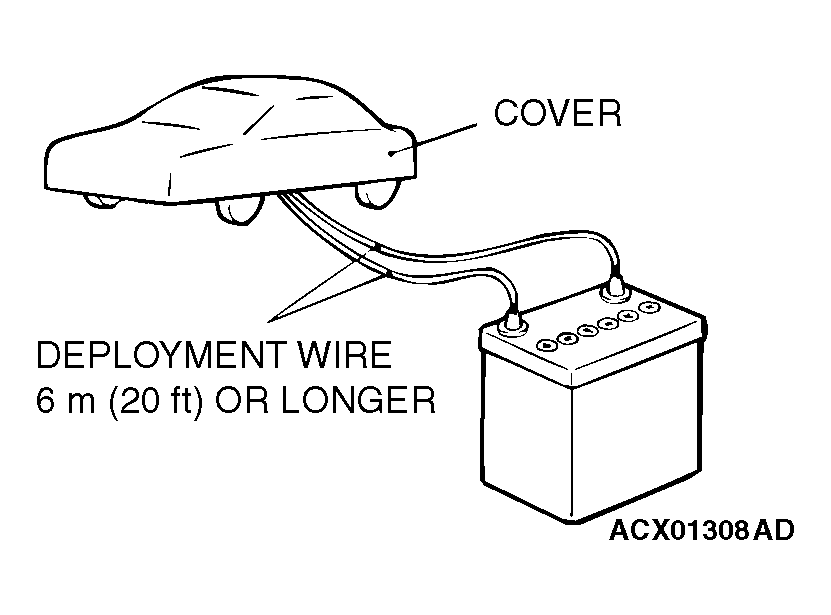
- To suppress the operation sound as much as possible completely close all door windows, close the doors and put the cover on the vehicle.
WARNING:
- Before deploying the air bag in this manner, first check to be sure that there is no one in or near the vehicle. Wear safety glasses.
- The inflator will be quite hot immediately following the deployment, so wait at least 30 minutes to allow it to cool before attempting to handle it. Although not poisonous, do not inhale gas from the air bag deployment. See Deployed Air Bag Module Disposal (Refer to DEPLOYED AIR BAG MODULE AND OPERATED SEAT BELT PRE-TENSIONER DISPOSAL
) for post-deployment handling instructions.
- If the air bag module fails to deploy, do not go near the module.
- At a location as far away from the vehicle as possible, disconnect the two connected wires from each other, and connect them to the two terminals of the battery (which has been removed from the vehicle) to deploy the air bag.
- After deployment, dispose of the air bag module according to the Deployed Air Bag Module and Operated Seat Belt Pre-tensioner Disposal (Refer to DEPLOYED AIR BAG MODULE AND OPERATED SEAT BELT PRE-TENSIONER DISPOSAL
).
 Courtesy of MITSUBISHI MOTOR SALES OF AMERICA.