Diagnosis & Repair
- If Toyota hand-held tester is available, go to next step. If Toyota hand-held tester is not available, go to step, 36.
- Check for any signs of hoses near fuel tank for modification and for signs of an accident which may have damaged the fuel tank or charcoal canister. Charcoal canister is located near fuel tank. See Figure. If no problems exist, go to next step. If any problems exist, repair or replace components as necessary.
- Check fuel tank cap to ensure fuel tank cap is a Original Equipment Manufacturer (OEM) fuel tank cap. If fuel tank cap is an OEM fuel tank cap, go to next step. If fuel tank cap is not an OEM fuel tank cap, replace fuel tank cap with an OEM fuel tank cap.
- Ensure fuel tank cap is properly installed and tightened. If fuel cap is properly installed and tightened, go to next step. If fuel cap is not properly installed or tightened, reinstall and tighten as necessary.
- Check fuel tank cap for damage and damaged gasket. If fuel tank cap is not damaged and gasket is okay, go to next step. If fuel tank cap or gasket is damaged, replace fuel tank cap with an OEM fuel tank cap.
- Remove fuel tank cap. Visually inspect fuel inlet pipe for damage. See Figure. If fuel inlet pipe is not damaged, go to next step. If fuel inlet pipe is damaged, replace fuel inlet pipe.
- Check vapor pressure sensor connection at fuel pump. See Figure. Check vacuum hoses to charcoal canister, EVAP VSV and pressure switching valve VSV for correct installation, loose connections, disconnected hoses and damage. See Figure for component location. If no problems exist, go to next step. If any problem exists, repair or replace components as necessary.
- Check hoses and tubes between fuel tank and charcoal canister for correct installation, loose connections, being disconnected and damage. See Figure. If no problems exist, go to next step. If any problem exists, repair or replace components as necessary.
- Check electrical connectors at EVAP VSV, canister closed valve VSV, pressure switching valve VSV and vapor pressure sensor for looseness, poor contact or for being disconnected. See Figure. If all electrical connectors are okay, go to next step. If any problem exists, repair or reconnect electrical connector as necessary.
- Check vacuum hoses and tubes between fuel tank, fuel inlet pipe, overfill check valve and charcoal canister for correct installation, loose connections, being disconnected, restricted or damaged. See Figure. If no problems exist, go to next step. If any problem exists, repair or replace components as necessary.
- Remove glove box and passenger's side kick panel (if necessary) for access to ECM with electrical connectors still installed on ECM. See Figure. Turn ignition on. Using voltmeter, check voltage between terminals No. 2 (Yellow wire) and No. 18 (Brown wire) at ECM electrical connector E5. See Figure. This is the VC and E2 terminals on ECM. Voltage should be 4.5-5.5 volts. If voltage is within specification, go to next step. If voltage is not within specification, replace ECM.
- Turn ignition off. Connect voltmeter between terminals No. 18 (Brown wire) at ECM electrical connector E5 and No. 21 (Blue/Black or White wire) at ECM electrical connector E7. SeeFigure. This is the E2 and PTNK terminals on ECM. There are 2 different wiring harnesses used and wire color varies according to wiring harness used. Remove fuel tank cap. Turn ignition on and note voltage. Voltage should be 3.0-3.6 volts. If voltage is not within specification, go to next step. If voltage is within specification, go to step 14.
- Check for open and short in wiring harness and electrical connectors between vapor pressure sensor and ECM. See WIRING DIAGRAMS article. If wiring harness and electrical connectors are okay, replace vapor pressure sensor. See VAPOR PRESSURE SENSOR under EMISSION SYSTEMS & SUB-SYSTEMS in REMOVAL, OVERHAUL & INSTALLATION - 4-CYLINDER article. If wiring harness or electrical connector is defective, repair as necessary.
- Connect hand-held tester to Data Link Connector (DLC) No. 3. See Figure. Turn ignition on and then turn hand-held tester on. Select ACTIVE TEST mode on hand-held tester. Note location of EVAP VSV on air intake hose, near air cleaner assembly and contains Black 2-pin electrical connector with Black/Red and Pink wires. See Figure.
- Disconnect vacuum hose at EVAP VSV that goes back to the charcoal canister. See Figure. Start engine and allow engine to idle. Using hand-held tester, operate EVAP VSV and check for vacuum at vacuum port on EVAP VSV. When EVAP VSV is on, vacuum should exist and when EVAP VSV is off, no vacuum should exist if EVAP VSV is operating properly. If EVAP VSV operates properly, shut engine off and leave hand-held tester connected to DLC No. 3. Go to next step. If EVAP VSV does not operate properly, shut engine off. Go to step 17.
- Check for damaged, disconnected or restricted vacuum hose between EVAP VSV and charcoal canister. If vacuum hose is okay, go to step 21. If vacuum hose is damaged, disconnected or restricted, repair or replace vacuum hose as necessary and go to step 21.
- Check for damaged, disconnected or restricted vacuum hose between intake manifold and EVAP VSV. If vacuum hose is okay, go to next step. If vacuum hose is damaged, disconnected or restricted, repair or replace vacuum hose as necessary.
- Remove EVAP VSV. Using ohmmeter, ensure continuity exists between electrical terminals on EVAP VSV and resistance is 30-34 ohms at 68°F (20°C). Using ohmmeter, ensure no continuity exists between each electrical terminal and body of EVAP VSV. If EVAP VSV resistance is within specification and no continuity exists between electrical terminal and body of EVAP VSV, go to next step. If resistance is not within specification or if continuity exists between electrical terminal and body of EVAP VSV, replace EVAP VSV along with charcoal canister. Clean vacuum hoses between intake manifold and EVAP VSV, and between EVAP VSV and charcoal canister.
- To test EVAP VSV operation, apply air pressure to port "E" on EVAP VSV. See Fig 1. Ensure air does not flow from port "F". Apply battery voltage and ground to electrical terminals on EVAP VSV. Apply air pressure to port "E" on EVAP VSV. Ensure air flows from port "F". If EVAP VSV operates properly, go to next step. If EVAP VSV does not operate properly, replace EVAP VSV along with charcoal canister. Clean vacuum hoses between intake manifold and EVAP VSV, and between EVAP VSV and charcoal canister.
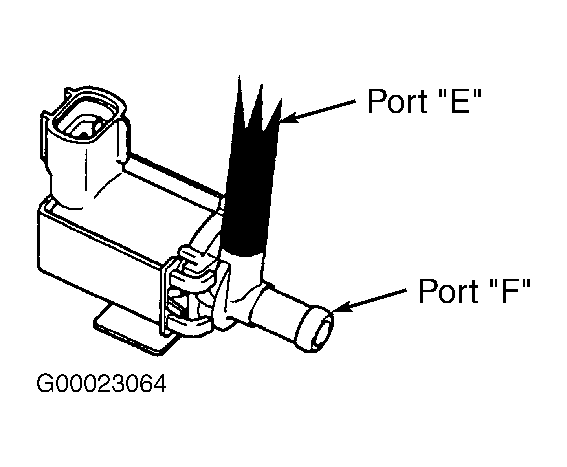 Courtesy of © TOYOTA, LICENSE AGREEMENT TMS1002
- Check for open and short in wiring harness and electrical connectors between EFI main relay, EFI3 fuse (10-amp) and EVAP VSV, and between EVAP VSV and ECM. See WIRING DIAGRAMS article. EFI main relay may also be referred to as EFI relay. EFI3 fuse and EFI main relay are located in fuse/relay box at driver's side front corner of engine compartment. ECM is located behind passenger's side kick panel, just below instrument panel. See Figure. If wiring harness and electrical connectors are okay, replace ECM. If wiring harness or electrical connector is defective, repair as necessary.
- Remove canister closed valve VSV. Canister closed valve VSV is located near driver's side strut tower and contains Black 2-pin electrical connector with Black/Red and Yellow/Green wires. See Figure. Reinstall electrical connector on canister closed valve VSV.
- Turn ignition on and then turn hand-held tester on. Select ACTIVE TEST mode on hand-held tester. Note ports on canister closed valve VSV. See Fig 2. Using hand-held tester, operate canister closed valve VSV while applying air pressure to port "E" on canister closed valve VSV. When canister closed valve VSV is on, air should not flow from port "F", and when canister closed valve VSV is off, air should flow from port "F". If canister closed valve VSV does not operate as specified, turn ignition off. Go to next step. If canister closed valve VSV operates as specified, turn ignition off and leave hand-held tester connected to DLC No. 3. Go to step 27.
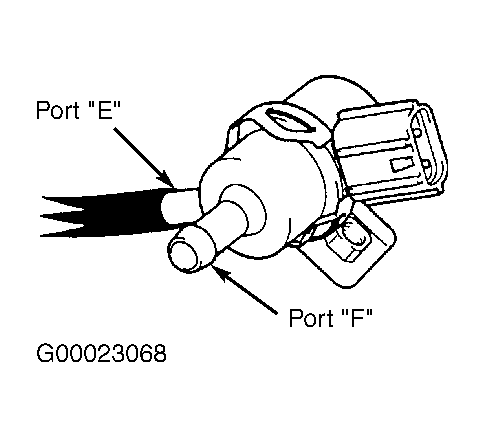 Courtesy of © TOYOTA, LICENSE AGREEMENT TMS1002
- Check vacuum hose between canister closed valve VSV and charcoal canister for correct installation, loose connections, being disconnected and damaged. See Figure. If no problems exist, go to next step. If any problem exists, repair or replace components as necessary.
- Disconnect electrical connector at canister closed valve VSV. Using ohmmeter, ensure continuity exists between electrical terminals on canister closed valve VSV and resistance is 25-30 ohms at 68°F (20°C). Using ohmmeter, ensure no continuity exists between each electrical terminal and body of canister closed valve VSV. If canister closed valve VSV resistance is within specification and no continuity exists between electrical terminal and body of canister closed valve VSV, go to next step. If resistance is not within specification or if continuity exists between electrical terminal and body of canister closed valve VSV, replace canister closed valve VSV along with charcoal canister. Clean vacuum hose between canister closed valve VSV and charcoal canister.
- To test canister closed valve VSV operation, apply air pressure to port "E" on canister closed valve VSV. See Fig 2. Ensure air flows from port "F". Apply battery voltage and ground to electrical terminals on canister closed valve VSV. Apply air pressure to port "E" on canister closed valve VSV. Ensure air does not flow from port "F". If canister closed valve VSV operates as specified, go to next step. If canister closed valve VSV does not operate as specified, replace canister closed valve VSV along with charcoal canister. Clean vacuum hose between canister closed valve VSV and charcoal canister.
- Check for open and short in wiring harness and electrical connectors between EFI main relay, EFI3 fuse (10-amp) and canister closed valve VSV, and between canister closed valve VSV and ECM. See WIRING DIAGRAMS article. EFI main relay may also be referred to as EFI relay. EFI3 fuse and EFI main relay are located in fuse/relay box at driver's side front corner of engine compartment. ECM is located behind passenger's side kick panel, just below instrument panel. See Figure. If wiring harness and electrical connectors are okay, replace ECM. If wiring harness or electrical connector is defective, repair as necessary.
- Disconnect vacuum hoses at pressure switching valve VSV. Pressure switching valve VSV is located on bracket at charcoal canister near fuel tank and contains Blue 2-pin electrical connector with Black/Red and Green/Orange or White wires. See Figure. There are 2 different wiring harnesses used and wire color varies according to wiring harness used. Ensure electrical connector is installed on pressure switching valve VSV.
- Turn ignition on and then turn hand-held tester on. Select ACTIVE TEST mode on hand-held tester. Note ports on pressure switching valve VSV. See Fig 3. Using hand-held tester, operate pressure switching valve VSV while applying air pressure to port "E" on pressure switching valve VSV. When pressure switching valve VSV is on, air should flow from port "F", and when pressure switching valve VSV is off, air should not flow from port "F". If pressure switching valve VSV does not operate as specified, turn ignition off. Go to next step. If pressure switching valve VSV operates as specified, turn ignition off and leave hand-held tester connected to DLC No. 3. Go to step 32.
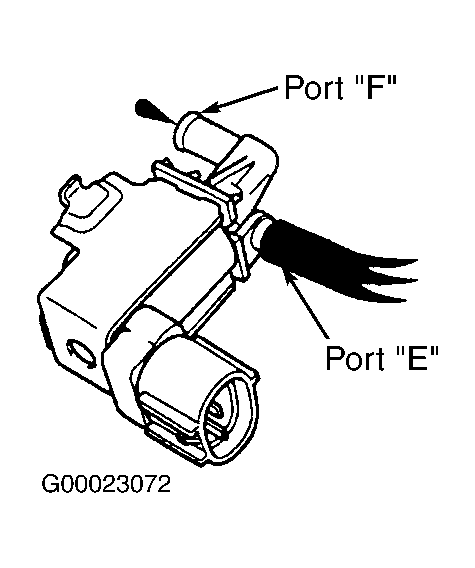 Courtesy of © TOYOTA, LICENSE AGREEMENT TMS1002
- Disconnect electrical connector at pressure switching valve VSV. Using ohmmeter, ensure continuity exists between electrical terminals on pressure switching valve VSV and resistance is 30-36 ohms at 68°F (20°C). Using ohmmeter, ensure no continuity exists between each electrical terminal and body of pressure switching valve VSV. If pressure switching valve VSV resistance is within specification and no continuity exists between electrical terminal and body of pressure switching valve VSV, go to next step. If resistance is not within specification or if continuity exists between electrical terminal and body of pressure switching valve VSV, replace pressure switching valve VSV along with charcoal canister. Clean vacuum hoses located between pressure switching valve VSV and charcoal canister, and between charcoal canister and fuel tank.
- To test pressure switching valve VSV operation, apply air pressure to port "E" on pressure switching valve VSV. See Fig 3. Ensure air does not flow from port "F". Apply battery voltage and ground to electrical terminals on pressure switching valve VSV. Apply air pressure to port "E" on pressure switching valve VSV. Ensure air flows from port "F". If pressure switching valve VSV operates as specified, go to next step. If pressure switching valve VSV does not operate as specified, replace pressure switching valve VSV along with charcoal canister. Clean vacuum hoses located between pressure switching valve VSV and charcoal canister, and between charcoal canister and fuel tank.
- Check for open and short in wiring harness and electrical connectors between EFI main relay, EFI3 fuse (10-amp) and pressure switching valve VSV, and between pressure switching valve VSV and ECM. See WIRING DIAGRAMS article. EFI main relay may also be referred to as EFI relay. EFI3 fuse and EFI main relay are located in fuse/relay box at driver's side front corner of engine compartment. ECM is located behind passenger's side kick panel, just below instrument panel. See Figure. If wiring harness and electrical connectors are okay, replace ECM. If wiring harness or electrical connector is defective, repair as necessary.
- Remove glove box and passenger's side kick panel (if necessary) for access to ECM with electrical connectors still installed on ECM. See Figure. Connect voltmeter between terminals No. 18 (Brown wire) at ECM electrical connector E5 and No. 21 (Blue/Black or White wire) at ECM electrical connector E7. See Figure. This is the E2 and PTNK terminals on ECM. There are 2 different wiring harnesses used and wire color varies according to wiring harness used.
- Turn ignition on. Select ACTIVE TEST mode on hand-held tester. Start engine and allow engine to idle. Using hand-held tester, turn canister closed valve VSV on, EVAP VSV off and pressure switching valve VSV on. Ensure pressure switching valve VSV is on for at least 30 seconds. Note voltage reading after switching EVAP VSV from off to on and pressure switching valve from on to off. Voltage should be 2.5 volts or less. If voltage is within specification, leave voltmeter connected with engine idling and go to next step. If voltage is not within specification, shut engine off and remove voltmeter. Replace fuel tank.
- Using hand-held tester, ensure canister closed valve VSV is on, EVAP VSV is off and pressure switching valve VSV is on. Ensure pressure switching valve VSV is on for at least 30 seconds. Note voltage reading between E2 and PTNK terminals on ECM after switching EVAP VSV from off to on. Voltage should be 2.5 volts or less. If voltage is within specification, shut engine off. Remove voltmeter and go to next step. If voltage is not within specification, shut engine off and remove voltmeter. Replace charcoal canister.
- Charcoal canister or overfill check valve may be defective. Check fuel evaporative system. See appropriate FUEL EVAP SYSTEM TEST under FUEL EVAPORATIVE SYSTEM under EMISSION SYSTEMS & SUB-SYSTEMS in SYSTEM & COMPONENT TESTING - 4-CYLINDER article.
- Check for any signs of hoses near fuel tank for modification and for signs of an accident which may have damaged the fuel tank or charcoal canister. Charcoal canister is located near fuel tank. See Figure. If no problems exist, go to next step. If any problems exist, repair or replace components as necessary.
- Check fuel tank cap to ensure fuel tank cap is a Original Equipment Manufacturer (OEM) fuel tank cap. If fuel tank cap is an OEM fuel tank cap, go to next step. If fuel tank cap is not an OEM fuel tank cap, replace fuel tank cap with an OEM fuel tank cap.
- Ensure fuel tank cap is properly installed and tightened. If fuel cap is properly installed and tightened, go to next step. If fuel cap is not properly installed or tightened, reinstall and tighten as necessary.
- Check fuel tank cap for damage and damaged gasket. If fuel tank cap is not damaged and gasket is okay, go to next step. If fuel tank cap or gasket is damaged, replace fuel tank cap with an OEM fuel tank cap.
- Remove fuel tank cap. Visually inspect fuel inlet pipe for damage. See Figure. If fuel inlet pipe is not damaged, go to next step. If fuel inlet pipe is damaged, replace fuel inlet pipe.
- Check vapor pressure sensor connection at fuel pump. See Figure. Check vacuum hoses to charcoal canister, EVAP VSV and pressure switching valve VSV for correct installation, loose connections, disconnected hoses and damage. See Figure for component location. If no problems exist, go to next step. If any problem exists, repair or replace components as necessary.
- Check hoses and tubes between fuel tank and charcoal canister for correct installation, loose connections, being disconnected and damage. See Figure. If no problems exist, go to next step. If any problem exists, repair or replace components as necessary.
- Check electrical connectors at EVAP VSV, canister closed valve Vacuum Switching Valve (VSV), pressure switching valve VSV and vapor pressure sensor for looseness, poor contact or for being disconnected. See Figure. If all electrical connectors are okay, go to next step. If any problem exists, repair or reconnect electrical connector as necessary.
- Check vacuum hoses and tubes between fuel tank, fuel inlet pipe, overfill check valve and charcoal canister for correct installation, loose connections, being disconnected, restricted or damaged. See Figure. If no problems exist, go to next step. If any problem exists, repair or replace components as necessary.
- Remove glove box and passenger's side kick panel (if necessary) for access to ECM with electrical connectors still installed on ECM. See Figure. Turn ignition on. Using voltmeter, check voltage between terminals No. 2 (Yellow wire) and No. 18 (Brown wire) at ECM electrical connector E5. See Figure. This is the VC and E2 terminals on ECM. Voltage should be 4.5-5.5 volts. If voltage is within specification, go to next step. If voltage is not within specification, replace ECM.
- Turn ignition off. Connect voltmeter between terminals No. 18 (Brown wire) at ECM electrical connector E5 and No. 21 (Blue/Black or White wire) at ECM electrical connector E7. See Figure. This is the E2 and PTNK terminals on ECM. There are 2 different wiring harnesses used and wire color varies according to wiring harness used. Remove fuel tank cap. Turn ignition on and note voltage. Voltage should be 3.0-3.6 volts. If voltage is not within specification, go to next step. If voltage is within specification, go to step 48.
- Check for open and short in wiring harness and electrical connectors between vapor pressure sensor and ECM. See WIRING DIAGRAMS article. If wiring harness and electrical connectors are okay, replace vapor pressure sensor. See VAPOR PRESSURE SENSOR under EMISSION SYSTEMS & SUB-SYSTEMS in REMOVAL, OVERHAUL & INSTALLATION - 4-CYLINDER article. If wiring harness or electrical connector is defective, repair as necessary.
- Disconnect vacuum hoses at EVAP VSV. EVAP VSV is located on air intake hose, near air cleaner assembly and contains Black 2-pin electrical connector with Black/Red and Pink wires. See Figure.
- Turn ignition on. Connect jumper wire between body ground and terminal No. 6 (Pink wire) at ECM electrical connector E5 to operate EVAP VSV. See Figure. This is the EVP1 terminal on ECM. With jumper wire connected so EVAP VSV is on, apply air pressure to port "E" on EVAP VSV. See Fig 1. Ensure air flows from port "F". Disconnect jumper wire so EVAP VSV is off. Apply air pressure to port "E" on EVAP VSV. Ensure air does not flow from port "F". If EVAP VSV does not operate as specified, turn ignition off. Go to next step. If EVAP VSV operates as specified, turn ignition off. Go to step 53.
- Remove EVAP VSV. Using ohmmeter, ensure continuity exists between electrical terminals on EVAP VSV and resistance is 30-34 ohms at 68°F (20°C). Using ohmmeter, ensure no continuity exists between each electrical terminal and body of EVAP VSV. If EVAP VSV resistance is within specification and no continuity exists between electrical terminal and body of EVAP VSV, go to next step. If resistance is not within specification or if continuity exists between electrical terminal and body of EVAP VSV, replace EVAP VSV along with charcoal canister. Clean vacuum hoses between intake manifold and EVAP VSV, and between EVAP VSV and charcoal canister.
- To test EVAP VSV operation, apply air pressure to port "E" on EVAP VSV. See Fig 1. Ensure air does not flow from port "F". Apply battery voltage and ground to electrical terminals on EVAP VSV. Apply air pressure to port "E" on EVAP VSV. Ensure air flows from port "F". If EVAP VSV operates properly, go to next step. If EVAP VSV does not operate properly, replace EVAP VSV along with charcoal canister. Clean vacuum hoses between intake manifold and EVAP VSV, and between EVAP VSV and charcoal canister.
- Check for open and short in wiring harness and electrical connectors between EFI main relay, EFI3 fuse (10-amp) and EVAP VSV, and between EVAP VSV and ECM. See WIRING DIAGRAMS article. EFI main relay may also be referred to as EFI relay. EFI3 fuse and EFI main relay are located in fuse/relay box at driver's side front corner of engine compartment. If wiring harness and electrical connectors are okay, replace ECM. If wiring harness or electrical connector is defective, repair as necessary.
- Disconnect vacuum hoses at canister closed valve VSV. Canister closed valve is located near driver's side strut tower and contains Black 2-pin electrical connector with Black/Red and Yellow/Green wires. See Figure.
- Turn ignition on. Connect jumper wire between body ground and terminal No. 2 (Yellow/Green wire) at ECM electrical connector E6 to operate canister closed valve VSV. See Figure. This is the CCV terminal on ECM. With jumper wire connected so canister closed valve VSV is on, apply air pressure to port "E" on canister closed valve VSV. See Fig 2. Ensure air does not flow from port "F". Disconnect jumper wire so canister closed valve VSV is off. Apply air pressure to port "E" on canister closed valve VSV. Ensure air flows from port "F". If canister closed valve VSV does not operate as specified, turn ignition off. Go to next step. If canister closed valve VSV operates as specified, turn ignition off. Go to step 58.
- Disconnect electrical connector at canister closed valve VSV. Using ohmmeter, ensure continuity exists between electrical terminals on canister closed valve VSV and resistance is 25-30 ohms at 68°F (20°C). Using ohmmeter, ensure no continuity exists between each electrical terminal and body of canister closed valve VSV. If canister closed valve VSV resistance is within specification and no continuity exists between electrical terminal and body of canister closed valve VSV, go to next step. If resistance is not within specification or if continuity exists between electrical terminal and body of canister closed valve VSV, replace canister closed valve VSV along with charcoal canister. Clean vacuum hose between canister closed valve VSV and charcoal canister.
- To test canister closed valve VSV operation, apply air pressure to port "E" on canister closed valve VSV. See Fig 2. Ensure air flows from port "F". Apply battery voltage and ground to electrical terminals on canister closed valve VSV. Apply air pressure to port "E" on canister closed valve VSV. Ensure air does not flow from port "F". If canister closed valve VSV operates as specified, go to next step. If canister closed valve VSV does not operate as specified, replace canister closed valve VSV along with charcoal canister. Clean vacuum hose between canister closed valve VSV and charcoal canister.
- Check for open and short in wiring harness and electrical connectors between EFI main relay, EFI3 fuse (10-amp) and canister closed valve VSV, and between canister closed valve VSV and ECM. See WIRING DIAGRAMS article. EFI main relay may also be referred to as EFI relay. EFI3 fuse and EFI main relay are located in fuse/relay box at driver's side front corner of engine compartment. If wiring harness and electrical connectors are okay, replace ECM. If wiring harness or electrical connector is defective, repair as necessary.
- Disconnect vacuum hoses at pressure switching valve VSV. Pressure switching valve VSV is located on bracket at charcoal canister near fuel tank and contains Blue 2-pin electrical connector with Black/Red and Green/Orange or White wires. See Figure. There are 2 different wiring harnesses used and wire color varies according to wiring harness used. Ensure electrical connector is installed on pressure switching valve VSV.
- Turn ignition on. Connect jumper wire between body ground and terminal No. 3 (Green/Orange or White wire) at ECM electrical connector E6 to operate pressure switching valve VSV. See Figure. This is the TBP terminal on ECM. With jumper wire connected so pressure switching valve VSV is on, apply air pressure to port "E" on pressure switching valve VSV. See Fig 3. Ensure air flows from port "F". Disconnect jumper wire so pressure switching valve VSV is off. Apply air pressure to port "E" on purge flow switching valve VSV. Ensure air does not flow from port "F". If pressure switching valve VSV does not operate as specified, turn ignition off. Go to next step. If pressure switching valve VSV operates as specified, go to step 63.
- Disconnect electrical connector at pressure switching valve VSV. Using ohmmeter, ensure continuity exists between electrical terminals on pressure switching valve VSV and resistance is 30-36 ohms at 68°F (20°C). Using ohmmeter, ensure no continuity exists between each electrical terminal and body of pressure switching valve VSV. If pressure switching valve VSV resistance is within specification and no continuity exists between electrical terminal and body of pressure switching valve VSV, go to next step. If resistance is not within specification or if continuity exists between electrical terminal and body of pressure switching valve VSV, replace pressure switching valve VSV along with charcoal canister. Clean vacuum hoses located between pressure switching valve VSV and charcoal canister, and between charcoal canister and fuel tank.
- To test pressure switching valve VSV operation, apply air pressure to port "E" on pressure switching valve VSV. See Fig 3. Ensure air does not flow from port "F". Apply battery voltage and ground to electrical terminals on pressure switching valve VSV. Apply air pressure to port "E" on pressure switching valve VSV. Ensure air flows from port "F". If pressure switching valve VSV operates as specified, go to next step. If pressure switching valve VSV does not operate as specified, replace pressure switching valve VSV along with charcoal canister. Clean vacuum hoses located between pressure switching valve VSV and charcoal canister, and between charcoal canister and fuel tank.
- Check for open and short in wiring harness and electrical connectors between EFI main relay, EFI3 fuse (10-amp) and pressure switching valve VSV, and between pressure switching valve VSV and ECM. See WIRING DIAGRAMS article. EFI main relay may also be referred to as EFI relay. EFI3 fuse and EFI main relay are located in fuse/relay box at driver's side front corner of engine compartment. If wiring harness and electrical connectors are okay, replace ECM. If wiring harness or electrical connector is defective, repair as necessary.
- Charcoal canister or overfill check valve may be defective. Check fuel evaporative system. See appropriate FUEL EVAP SYSTEM TEST under FUEL EVAPORATIVE SYSTEM under EMISSION SYSTEMS & SUB-SYSTEMS in SYSTEM & COMPONENT TESTING - 4-CYLINDER article.