Diagnosis & Repair
- Ensure ignition is off. Remove glove box and passenger's side kick panel (if necessary) for access to ECM with electrical connectors still installed on ECM. See Figure. Disconnect ECM electrical connector E4. See Figure.
- Using ohmmeter, check resistance between body ground and terminal No. 27 (White wire) at ECM electrical connector E4. This is the KNK1 terminal on ECM. Resistance should be one megohm or more. If resistance is not within specification, go to next step. If resistance is within specification, go to step 4.
- Check knock sensor. See KNOCK SENSOR under ENGINE SENSORS & SWITCHES in SYSTEM & COMPONENT TESTING - 4-CYLINDER article. If knock sensor is okay, go to next step. If knock sensor is defective, replace knock sensor.
- Check for open and short in White wire and electrical connectors between knock sensor and ECM. See WIRING DIAGRAMS article. If wiring and electrical connectors are okay, go to next step. If wiring or electrical connector is defective, repair as necessary.
- Replace knock sensor with a known-good knock sensor. For servicing of knock sensor, see KNOCK SENSOR under ENGINE SENSORS & SWITCHES in REMOVAL, OVERHAUL & INSTALLATION - 4-CYLINDER article. Using Toyota hand-held tester or scan tool, clear DTCs from ECM. Recheck for DTCs. If DTC P0325 still exists, replace ECM. If DTC P0325 does not exist, the original knock sensor was defective.
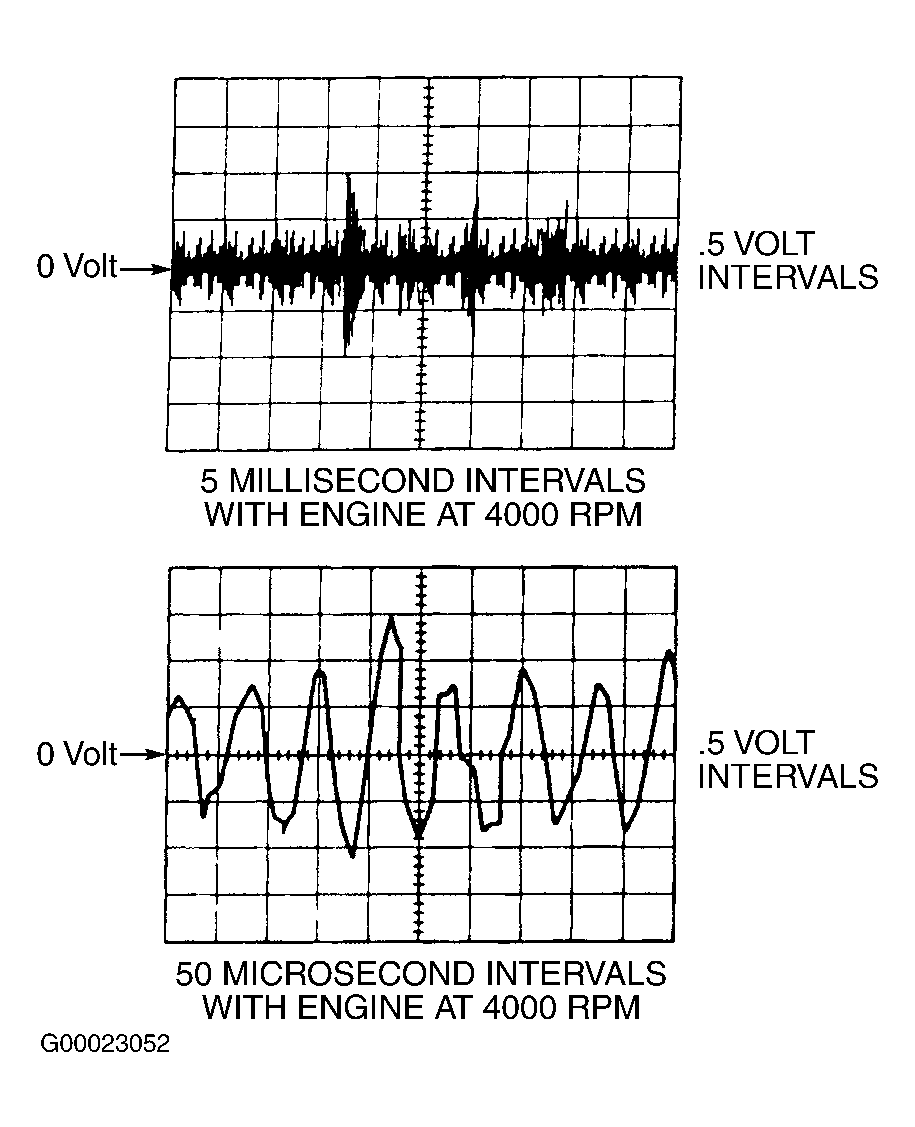 Courtesy of © TOYOTA, LICENSE AGREEMENT TMS1002