DTC P1457: Evaporative Emission Control System Leak Detected (Canister System)
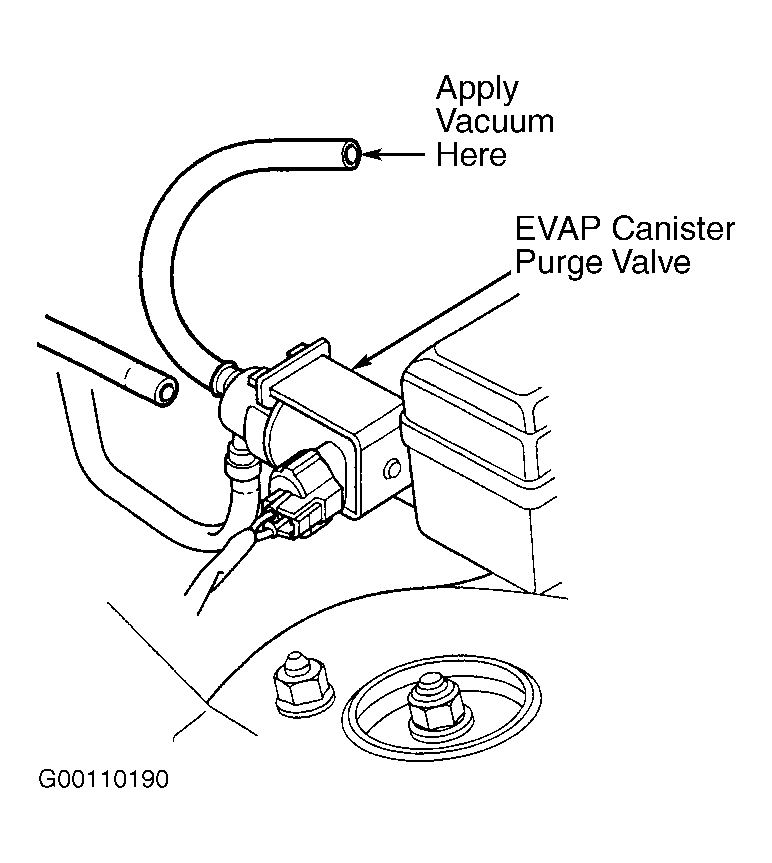
- Disconnect vacuum hose from EVAP canister purge valve. Connect vacuum pump to disconnected port on EVAP canister purge valve. See Fig 1
. Apply vacuum to valve. If valve holds vacuum, EVAP canister purge valve is okay, go to next step. If EVAP canister purge valve does not hold vacuum, replace EVAP canister purge valve. If valve is contaminated with charcoal particles, replace EVAP canister and blow out vacuum hoses.
 Courtesy of AMERICAN HONDA MOTOR CO., INC.
- Turn canister purge valve on with scan tool or connect fused jumper wire between ground and PCM 32-pin "A" harness connector terminal No. 6 (Red/Yellow wire - A/T) or PCM 31-pin "E" harness connector terminal No.11 (Red/Yellow wire - (M/T). See appropriate wiring diagram under ENGINE PERFORMANCE in WIRING DIAGRAMS. Turn ignition switch on. Apply vacuum to EVAP canister purge valve. If valve holds vacuum, go to next step. If valve does not hold vacuum, EVAP canister purge valve is okay. Go to step 5
.
- Turn ignition switch off. Disconnect EVAP canister purge valve 2-pin harness connector. Check for continuity between ground and EVAP canister purge valve 2-pin harness connector (Red/Yellow wire). If continuity is present, go to next step. If continuity is not present, repair open in Red/Yellow wire between EVAP canister purge valve 2-pin harness connector and PCM 32-pin "A" harness connector terminal No. 6 (Red/Yellow wire - A/T) or PCM 31-pin "E" harness connector terminal No.11 (Red/Yellow wire - M/T). See appropriate wiring diagram under ENGINE PERFORMANCE in WIRING DIAGRAMS.
- Turn ignition switch on. Measure voltage between ground and EVAP canister purge valve 2-pin harness connector terminal (Black/Yellow wire). If battery voltage is present, replace EVAP canister purge valve. If battery voltage is not present, repair open in Black/Yellow wire between EVAP canister purge valve 2-pin harness connector terminal and No. 6 ECU (PCM) CRUISE CONTROL fuse (15-amp) in driver's under-dash fuse/relay box.
- Disconnect vacuum hose from EVAP 2-way valve. Connect a vacuum pump to canister port on EVAP 2-way valve and apply vacuum. See Figure
. Turn ignition switch on. If valve does not hold vacuum, go to next step. If valve holds vacuum, EVAP by-pass solenoid valve/EVAP 2-way valve is okay. Go to step 8
.
- Turn ignition switch off. Disconnect EVAP by-pass solenoid valve 2-pin harness connector. Check for continuity between ground and EVAP by-pass solenoid valve 2-pin harness connector terminal No. 2 (Blue wire). See appropriate wiring diagram under ENGINE PERFORMANCE in WIRING DIAGRAMS. If continuity is present, go to next step. If continuity is not present, replace EVAP by-pass solenoid valve and "O" rings.
- Disconnect PCM 32-pin "A" harness connector (A/T) or PCM 31-pin "E" harness connector (M/T). Check for continuity between ground and EVAP by-pass solenoid valve 2-pin harness connector terminal No. 2 (Blue wire). If continuity is present, repair short in Blue wire between PCM 32-pin "A" harness connector terminal No. 3 (A/T) or PCM 31-pin "E" harness connector terminal No. 23 (M/T) and EVAP by-pass solenoid valve 2-pin harness connector terminal No. 2. If continuity is not present, substitute known-good PCM, then recheck. If symptom or indication goes away, replace original PCM.
- Disconnect vacuum hose from EVAP canister vent filter tube. Connect vacuum pump to disconnected hose. Turn canister vent shut valve on with scan tool or connect fused jumper wire between ground and PCM 32-pin "A" harness connector terminal No. 4 (Light Green/White wire - A/T) or PCM 31-pin "E" harness connector terminal No. 22 (Light Green/White wire - M/T). Turn ignition switch on. Apply vacuum to EVAP canister vent shut valve. If valve does not hold vacuum, go to next step. If valve holds vacuum, EVAP canister vent shut valve is okay. Go to step 11
.
- Turn ignition switch off. Disconnect EVAP canister vent shut valve 2-pin harness connector. Check for continuity between ground and EVAP canister vent shut valve 2-pin harness connector terminal No. 2 (Light Green/White wire). If continuity is present, go to next step. If continuity is not present, repair open in Light Green/White wire between PCM 32-pin "A" harness connector terminal No. 4 (Light Green/White wire - A/T) or PCM 31-pin "E" harness connector terminal No. 22 (Light Green/White wire - M/T) and EVAP canister vent shut valve 2-pin harness connector terminal No. 2. See appropriate wiring diagram under ENGINE PERFORMANCE in WIRING DIAGRAMS.
- Turn ignition switch on. Measure voltage between ground and EVAP canister vent shut valve 2-pin harness connector terminal No. 1 (Black/Yellow wire). If battery voltage is present, replace EVAP canister vent shut valve and "O" ring. If battery voltage is not present, repair open in Black/Yellow wire between EVAP canister vent shut valve and No. 6 ECU (PCM) CRUISE CONTROL fuse (15-amp) in driver's under-dash fuse/relay box.
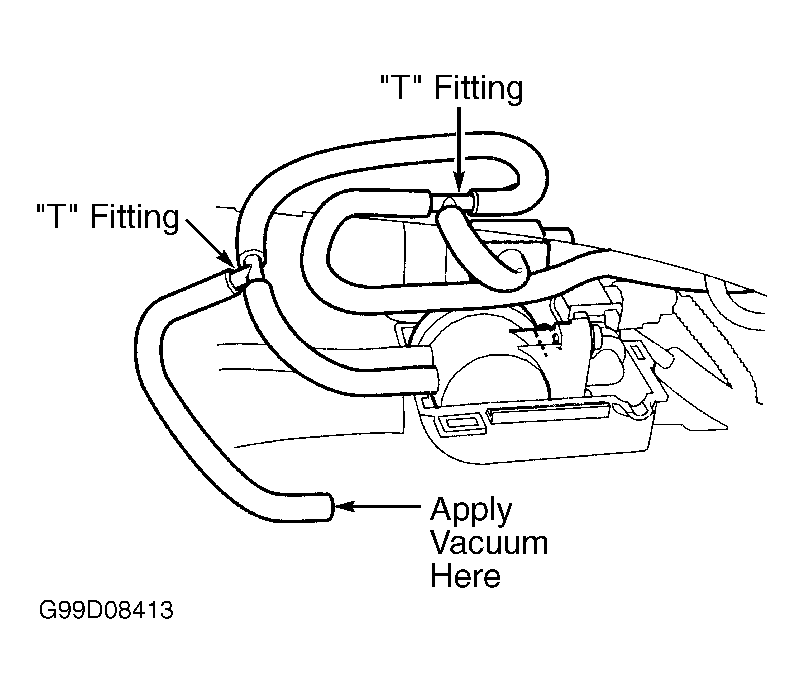
- Turn ignition switch off. Connect two "T" fittings into vacuum hose from EVAP canister to EVAP 2-way valve. See Fig 2
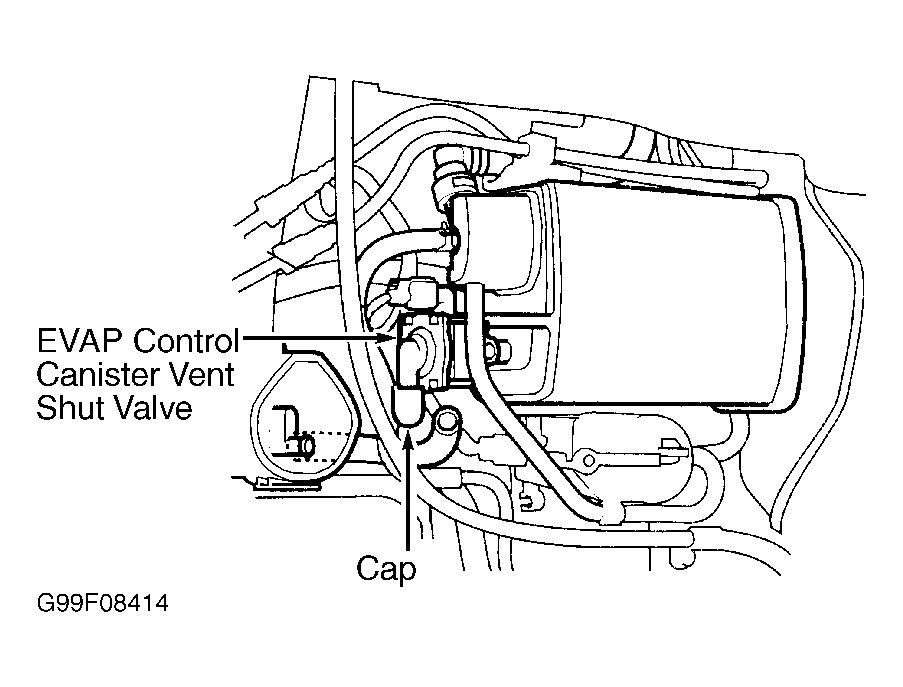
. Connect Fuel Tank Pressure (FTP) sensor to one "T" fitting, and vacuum pump to other "T" fitting. Remove vent hose from EVAP canister vent shut valve. Cap port to seal fresh air vent for EVAP canister. See Fig 3
. Turn ignition switch on. Monitor FTP sensor voltage with scan tool or measure voltage between PCM 32-pin "A" harness connector terminal No. 29 (Light Green wire) and 31-pin "C" harness connector terminal No. 18 (Green/Yellow wire - A/T) or PCM 31-pin "E" harness connector terminal No. 28 (Light Green wire) and 31-pin "A" harness connector terminal No. 28 (Green/Yellow wire - M/T) while slowly applying vacuum. See appropriate wiring diagram under ENGINE PERFORMANCE in WIRING DIAGRAMS. Continue to pump vacuum until voltage drops to about 1.5 volts. Ensure engine coolant temperature is more than 95°F (35C°) and vacuum pump has no leak. Check voltage for 20 seconds. If voltage does not drop to 1.5 volts and hold for at least 20 seconds, go to next step. If voltage drops to 1.5 volts and holds for at least 20 seconds, check EVAP canister vent shut valve line and connections. Repair as necessary.
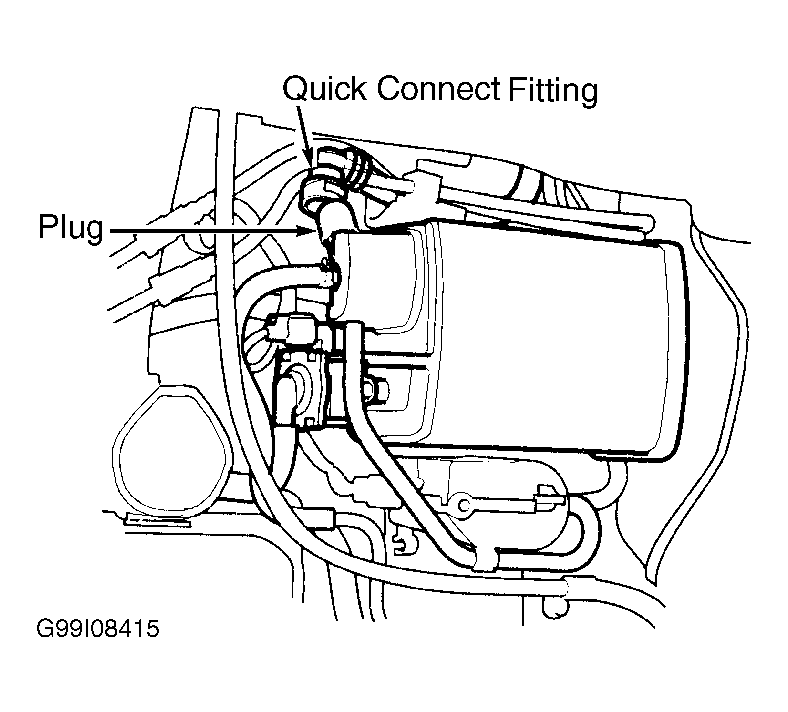
- Turn ignition switch off. Disconnect quick-connect fitting from EVAP canister. Plug canister port. See Fig 4
. Turn ignition switch on. Monitor FTP sensor voltage with scan tool or measure voltage between PCM 32-pin "A" harness connector terminal No. 29 (Light Green wire) and 31-pin "C" harness connector terminal No. 18 (Green/Yellow wire - A/T) or PCM 31-pin "E" harness connector terminal No. 28 (Light Green wire) and 31-pin "A" harness connector terminal No. 28 (Green/Yellow wire - M/T) while slowly applying vacuum. See appropriate wiring diagram under ENGINE PERFORMANCE in WIRING DIAGRAMS. Continue to pump vacuum until voltage drops to about 1.5 volts. Ensure engine temperature is more than 95°F (35°C) and vacuum pump does not leak. Monitor voltage for 20 seconds. If voltage does not drop to 1.5 volts and hold for at least 20 seconds, go to next step. If voltage drops to 1.5 volts and holds for at least 20 seconds, check fuel tank vapor control line and connections. Repair as necessary.
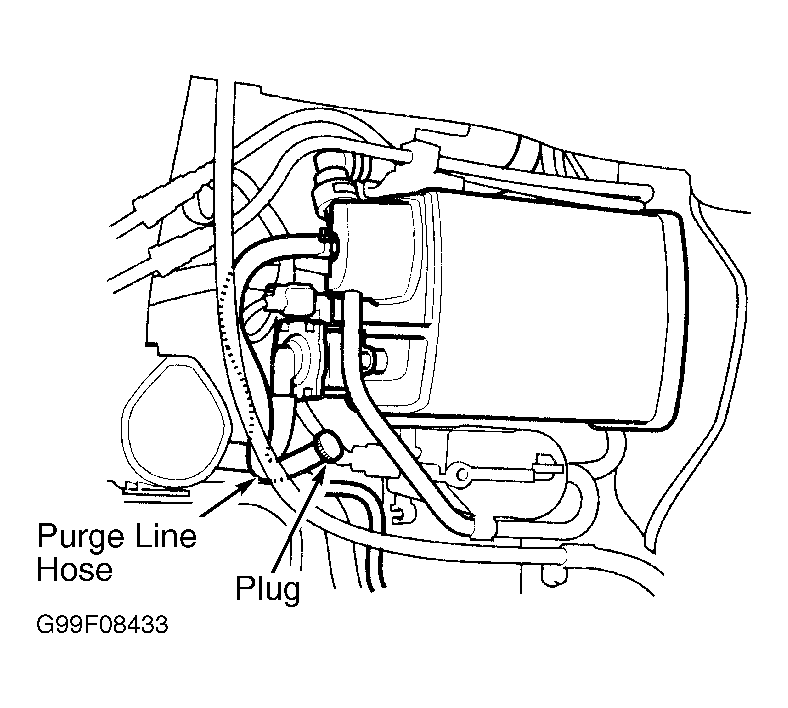
- Turn ignition switch off. Disconnect purge line hose from EVAP canister at purge line. Plug disconnected hose. See Fig 5
. Turn ignition switch on. Monitor FTP sensor voltage with scan tool or measure voltage between PCM 32-pin "A" harness connector terminal No. 29 (Light Green wire) and 31-pin "C" harness connector terminal No. 18 (Green/Yellow wire - A/T) or PCM 31-pin "E" harness connector terminal No. 28 (Light Green wire) and 31-pin "A" harness connector terminal No. 28 (Green/Yellow wire - M/T) while slowly applying vacuum. Continue to pump vacuum until voltage drops to about 1.5 volts. Ensure engine coolant temperature is more than 95°F (35C°) and vacuum pump does not leak. Monitor voltage for 20 seconds. If voltage drops to 1.5 volts and holds for at least 20 seconds, check EVAP canister purge valve line and connections. Repair as necessary. If EVAP canister purge valve line and connections are okay, perform EVAPORATIVE EMISSION 2-WAY VALVE TEST
and FUEL TANK VAPOR CONTROL VALVE TEST
. If voltage does not drop to 1.5 volts and hold for at least 20 seconds, replace EVAP canister and repeat step 13
. If system holds vacuum, repair is complete.
 Courtesy of AMERICAN HONDA MOTOR CO., INC.
 Courtesy of AMERICAN HONDA MOTOR CO., INC.
 Courtesy of AMERICAN HONDA MOTOR CO., INC.
 Courtesy of AMERICAN HONDA MOTOR CO., INC.