Diagnostic Procedure
- Turn ignition off. Disconnect EVAP control system pressure sensor harness connector. See Fig 1. Turn ignition on. Using a DVOM, measure voltage between EVAP control system pressure sensor harness connector terminal No. 3 (Pink/Black wire) and ground. If voltage is about 5 volts, go to next step. If voltage is not about 5 volts, check for faulty joint connector No. 1 or fault in Pink/Black wire. Repair or replace as required.
- Check Ground Circuit. Turn ignition off. Loosen and retighten engine ground bolts. See Figure. Disconnect EVAP control system pressure sensor harness connector. Using a DVOM, check continuity between EVAP control system pressure sensor harness connector terminal No. 1 (Black wire) and ground. If continuity does not exist, repair open in Black wire. If continuity exists, go to next step.
- Check Input Signal Circuit. Leave ignition off. Disconnect PCM harness connector. Using a DVOM, check continuity between EVAP control system pressure sensor harness connector terminal No. 2 (Green/Black wire) and PCM harness connector terminal No. 67. If continuity does not exist, repair open in Green/Black wire. If continuity exists, go to next step.
- Check EVAP Canister Vent Control Valve. Go to step 5) of DTC P0440: EVAPORATIVE EMISSION (EVAP) CONTROL SYSTEM LEAK . Repair or replace if necessary. If EVAP canister vent control valve is okay, go to next step.
- Remove EVAP control system pressure sensor. Reconnect harness connector. Connect vacuum pump to vacuum port. Measure voltage between ground and EVAP control system pressure sensor harness connector terminal No. 2 (Blue wire). See Fig 2. Voltage should be 3.0-3.6 volts. Apply 2.8 in Hg to sensor. Voltage should be about 0.4-0.6. If voltage is not as specified, replace EVAP control system pressure sensor. If voltage is as specified, disconnect system harness connectors and inspect for damage or corrosion. Repair as necessary and retest.
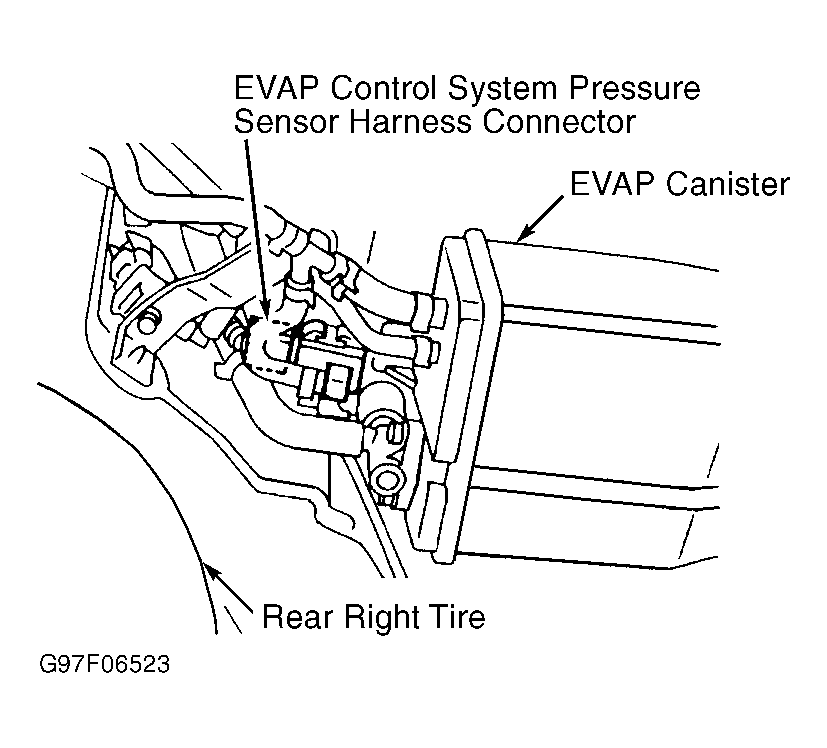 Courtesy of NISSAN MOTOR CO., U.S.A.
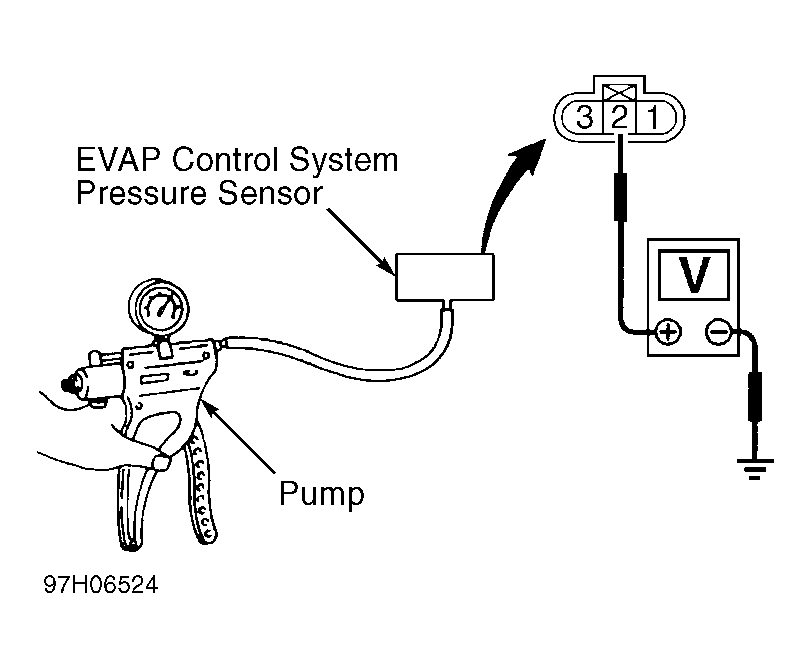 Courtesy of NISSAN MOTOR CO., U.S.A.