Intake Air Control Valve System: Non-Turbo
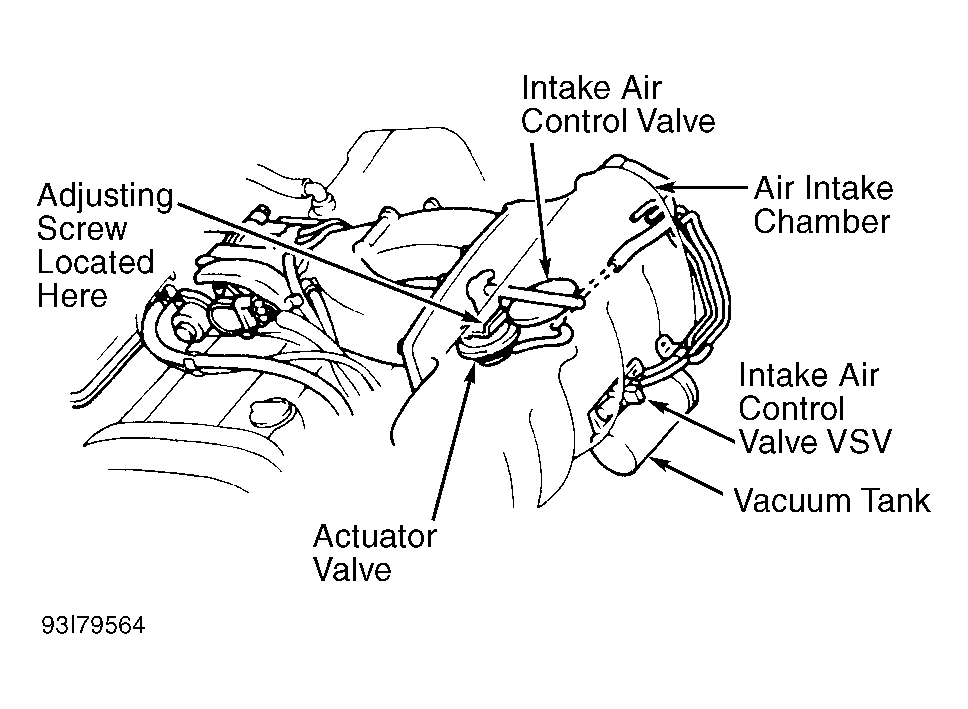
- Using 3-way connector, connect vacuum gauge in vacuum line to the actuator valve. Actuator valve is located on side of air intake chamber. See Fig 1. Start engine. With engine idling, ensure no vacuum reading is obtained.
- Fully open throttle and ensure vacuum reading momentarily reads at least 9.8 in. Hg and actuator valve rod pulls downward. If actuator valve rod fails to pull downward, proceed to next step.
 Courtesy of © TOYOTA, LICENSE AGREEMENT TMS1002
- Disconnect vacuum hose from actuator valve located on side of air intake chamber. It may be necessary to remove air intake chamber for access to actuator valve.
- Using vacuum pump, apply approximately 16 in. Hg of vacuum to actuator valve. Ensure actuator valve rod pulls downward and remains pulled downward for at least one minute.
NOTE:
If actuator valve rod does not move downward, it may be necessary to rotate adjusting screw near the shaft located in the air intake chamber. See Fig 1.
- Replace actuator valve if defective. If actuator valve operates correctly, reconnect vacuum hose. Proceed to next step.
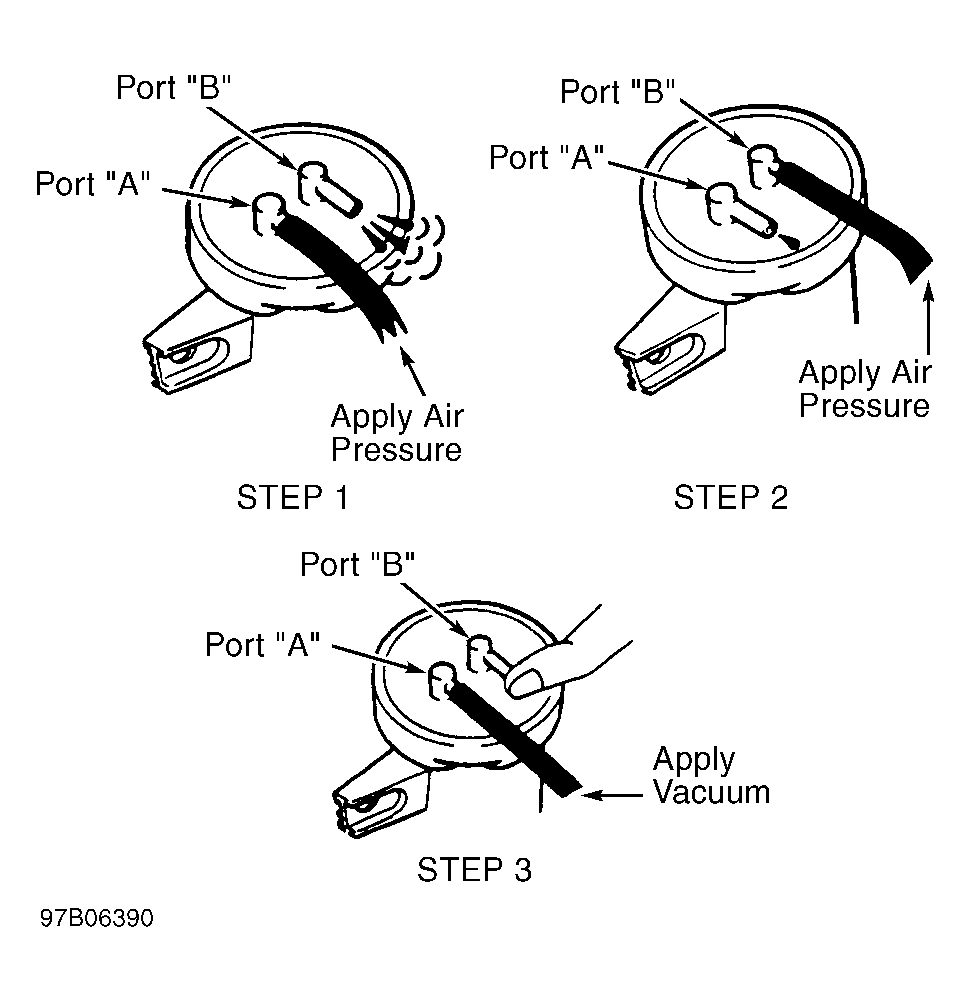
- Disconnect vacuum hoses from vacuum tank. Vacuum tank is located below air intake chamber. See Fig 1. Apply air pressure to port "A" on vacuum tank. Ensure air flows from port "B". Perform STEP 1. See Fig 2. Apply air pressure to port "B". Ensure air does not flow from port "A". Perform STEP 2. See Fig 2.
- Plug port "B" on vacuum tank. Using vacuum pump, apply approximately 16 in. Hg of vacuum to port "A". Perform STEP 3. See Fig 2. Ensure vacuum reading holds for at least one minute. Replace vacuum tank if defective and recheck system operation. If vacuum tank is okay, reconnect vacuum hoses. Proceed to next step.
 Courtesy of © TOYOTA, LICENSE AGREEMENT TMS1002
- Disconnect electrical connector from intake air control valve Vacuum Switching Valve (VSV). Intake air control valve VSV is located near vacuum tank. See Fig 1. It may be necessary to remove vacuum tank for access to intake air control valve VSV.
- Using ohmmeter, ensure continuity exists between electrical terminals on intake air control valve VSV and resistance is 39-45 ohms at 68°F (20°C). Ensure no continuity exists between each electrical terminal and body of intake air control valve VSV.
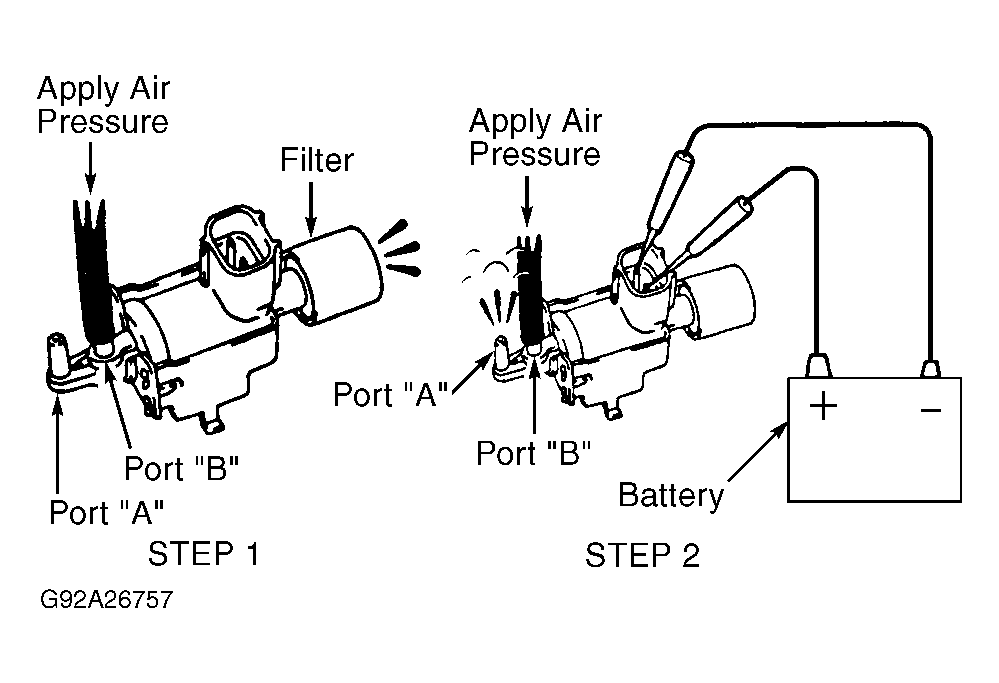
- To test intake air control valve VSV operation, apply air pressure to port "B". Ensure air flows from the filter. Perform STEP 1. See Fig 3. Apply battery voltage and ground to electrical terminals on intake air control valve VSV. Apply air pressure to port "B". Ensure air flows from port "A". Perform STEP 2. See Fig 3. Replace intake air control valve VSV if defective. Recheck system operation.
- If intake air control valve VSV is okay, reinstall intake air control valve VSV. Ensure ignition is off. Remove passenger's side door scuff plate.
- Remove carpet below instrument panel on passenger's side for access to Engine Control Module (ECM). The ECM is located on the floor panel, below the glove box and ECM protector. Remove ECM protector.
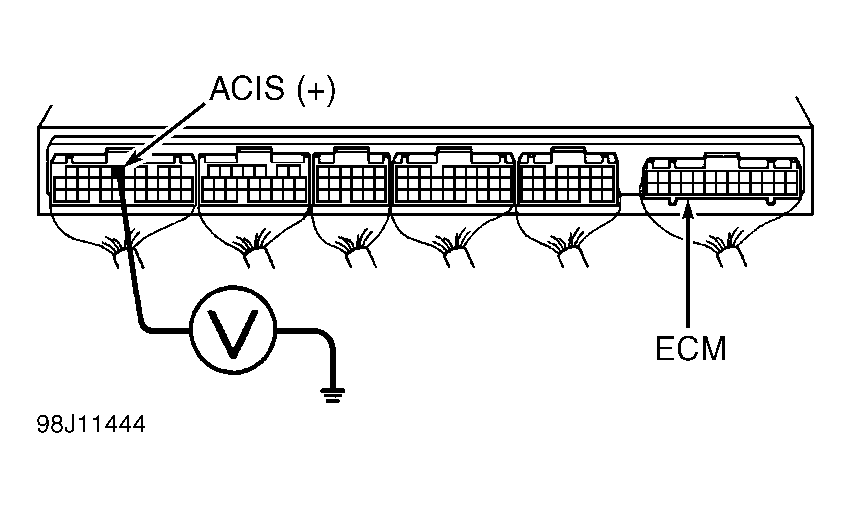
- Turn ignition on. Using voltmeter, check voltage between ground and ACIS (+) terminal (Green/Yellow wire) on ECM. See Fig 4. This is the wire from ECM to intake air control valve VSV.
- Voltage should be 9-14 volts. If voltage is not within specification, check for defective EFI main relay or wiring harness between EFI main relay, intake air control valve VSV and ECM. See EFI MAIN RELAY under MOTORS & RELAYS. See appropriate wiring diagram in WIRING DIAGRAMS
article. If EFI main relay and wiring harness are okay, substitute another ECM and recheck system operation.
 Courtesy of © TOYOTA, LICENSE AGREEMENT TMS1002
 Courtesy of © TOYOTA, LICENSE AGREEMENT TMS1002