Hydrocarbon Absorber Catalyst System Check (Prius)
- Hydrocarbon absorber may also be referred to as HC absorber. Start engine and warm engine to normal operating temperature. Shut engine off. If using Toyota hand-held tester, go to next step. If Toyota hand-held tester is not available, go to step 3.
- Connect hand-held tester to data link connector No. 3. See Figure. Start engine. Turn hand-held tester on. Select proper mode on hand-held tester to operate HCAC Vacuum Switching Valve (VSV). Go to step 4.
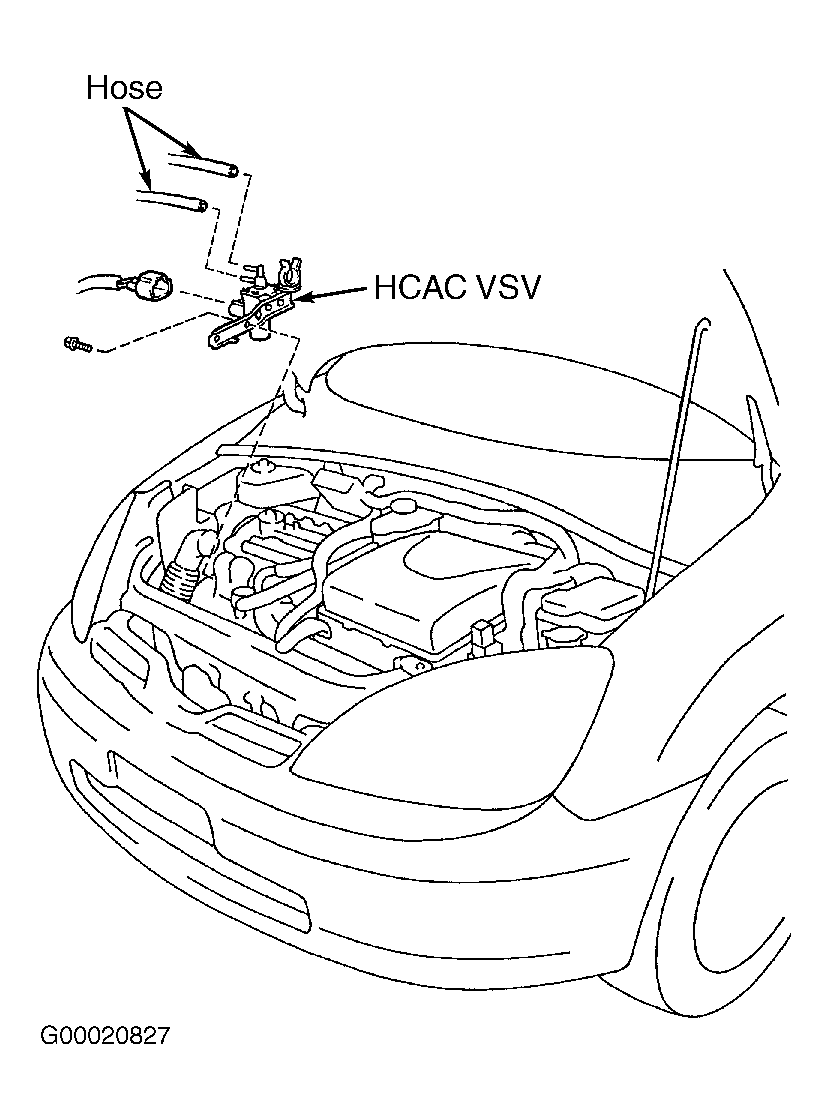
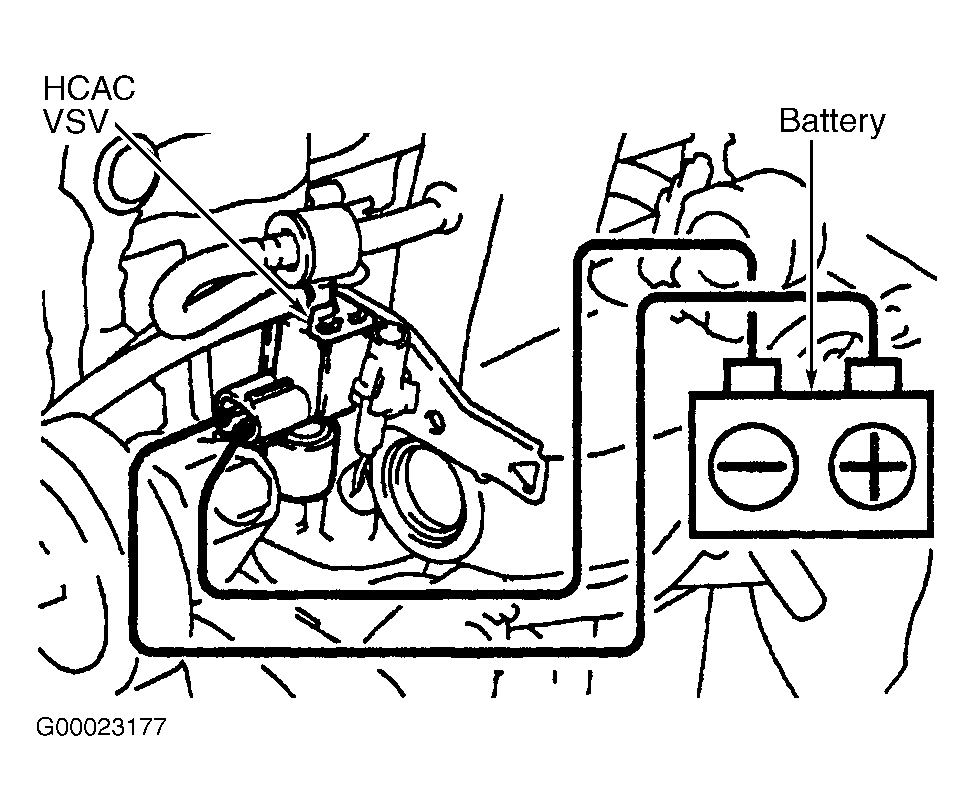
- Disconnect electrical connector at HCAC Vacuum Switching Valve (VSV). See Fig 1. HCAC VSV is located on bracket bolted to timing chain end of engine and uses a Brown 2-pin electrical connector with Black and Black/White wires. Apply battery voltage and ground to electrical terminals on HCAC VSV to operate HCAC VSV. See Fig 2. Start engine. Go to next step.
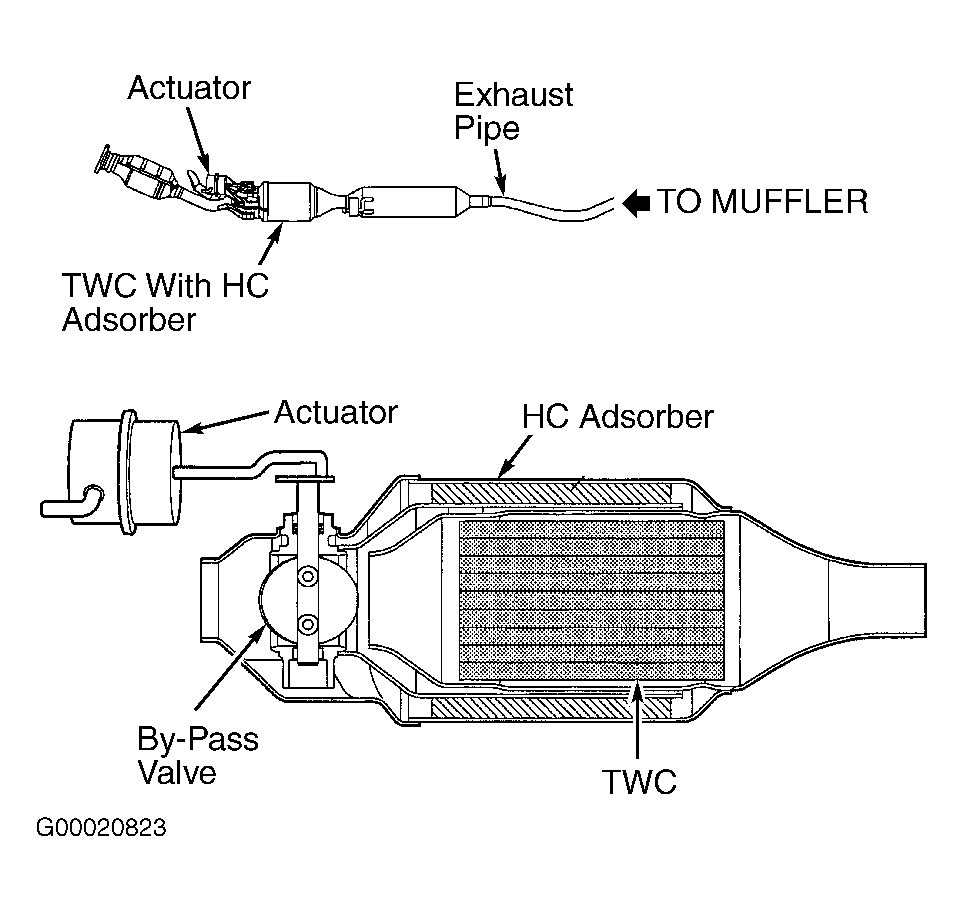
- With engine idling and HCAC VSV operating, check that rod on actuator is pulled inward and that by-pass valve moves. Actuator and by-pass valve are located at front of three-way catalytic converter on exhaust pipe. See Fig 3. If rod on actuator is not pulled inward and by-pass valve does not move, shut engine off. Go to next step. If rod on actuator is pulled inward and by-pass valve moves, HCAC system is operating properly. Shut engine off. Reinstall electrical connector at HCAC VSV (if removed) and disconnect hand-held tester (if used).
- Check vacuum hose and line to HCAC VSV. If vacuum hose and line are okay, check operation of actuator for HCAC system and HCAC VSV. See ACTUATOR FOR HCAC SYSTEM & BY-PASS VALVE and HCAC VACUUM SWITCHING VALVE . If vacuum hose or line are defective, replace components as necessary and recheck system operation.
 Courtesy of © TOYOTA, LICENSE AGREEMENT TMS1002
 Courtesy of © TOYOTA, LICENSE AGREEMENT TMS1002
 Courtesy of © TOYOTA, LICENSE AGREEMENT TMS1002